


Get your package anywhere!

H Rosacea Formula: What It Is & How to Manage Flare-Ups
If you've been searching for the H rosacea formula, you're probably tired of products that promise calm skin and deliver irritation instead. Rosacea is one of the most misunderstood skin conditions out there — and finding a formula that actually works without triggering a flare-up can feel like hunting for a needle in a haystack. This guide breaks down exactly what the term means, which ingredients deserve a spot in your routine, and how to build a daily regimen your skin will genuinely thank you for.
Table of Contents
- What Exactly Is the H Rosacea Formula?
- Key Ingredients to Look For (and Ingredients to Avoid)
- Building a Gentle Daily Routine Around Your H Rosacea Formula
- Common Rosacea Triggers to Track and Minimize
- How High-Frequency Technology Complements Your Rosacea Routine
- When to See a Dermatologist (and What to Ask)
- Frequently Asked Questions
What Exactly Is the H Rosacea Formula?
The phrase "H rosacea formula" doesn't refer to a single universal product. It's a term used across the skincare industry to describe a targeted topical blend formulated specifically for rosacea-prone skin — one that addresses the condition's hallmark symptoms: persistent redness, visible capillaries, papulopustular breakouts (those small red bumps that aren't quite acne), and overall skin sensitivity.
What unifies these formulas, regardless of brand, is a shared philosophy: calming anti-inflammatory actives + barrier-support ingredients + a minimal, trigger-free base. The fewer unnecessary additives, the better.
Rosacea is more common than most people realize. According to the American Academy of Dermatology, it affects millions of adults worldwide, with fair-skinned women being among the most commonly diagnosed groups. Research suggests it impacts an estimated 5–10% of the global adult population.
There are three main subtypes a rosacea calming formula typically targets:
- Erythematotelangiectatic rosacea — persistent redness and visible blood vessels
- Papulopustular rosacea — redness with acne-like breakouts
- Phymatous rosacea — thickening of the skin, most often on the nose
Quick tip : Before applying any new rosacea formula to your full face, always patch-test on a small area of your inner arm or jaw for 24–48 hours. Rosacea-prone skin is reactive — what works for someone else may not work for you.
Key Ingredients to Look For (and Ingredients to Avoid)
This is where the real work happens. A genuinely effective rosacea calming formula lives or dies by its ingredient list. Here's what to prioritize — and what to run from.
Ingredients That Earn a Place in Your Routine
| Ingredient | What It Does for Rosacea Skin |
|---|---|
| Azelaic acid | Anti-inflammatory; reduces papules and visible redness. Multiple peer-reviewed studies support its efficacy as an FDA-recognized topical for rosacea. |
| Niacinamide | Strengthens the skin barrier, visibly reduces redness with regular use |
| Centella asiatica (cica) | Soothes irritation, accelerates skin repair, deeply calming |
| Green tea extract / EGCG | Antioxidant; blunts the skin's inflammatory response |
| Ceramides | Restores barrier integrity — essential when the skin is sensitized |
| Tranexamic acid | Fades post-inflammatory discoloration and uneven skin tone |
Ingredients to Actively Avoid
- Alcohol-based toners and astringents — strip the barrier and trigger flushing
- High-fragrance formulas — synthetic fragrance is a leading sensitizer
- Menthol and eucalyptus — cooling sensation comes at the cost of irritation
- Physical scrubs during active flares — mechanical exfoliation worsens inflammation
- High-dose ascorbic acid (L-vitamin C) at low pH — can sting and destabilize sensitized skin; choose gentler derivatives like ascorbyl glucoside instead
- Concentrated essential oils (lavender, peppermint, tea tree) — lovely in theory, problematic in practice for rosacea-prone skin
Expert insight : Dermatologists generally recommend keeping your ingredient list as short as possible when managing rosacea. Each new active is a potential trigger. A five-ingredient formula used consistently often outperforms a complex 20-ingredient serum used intermittently.
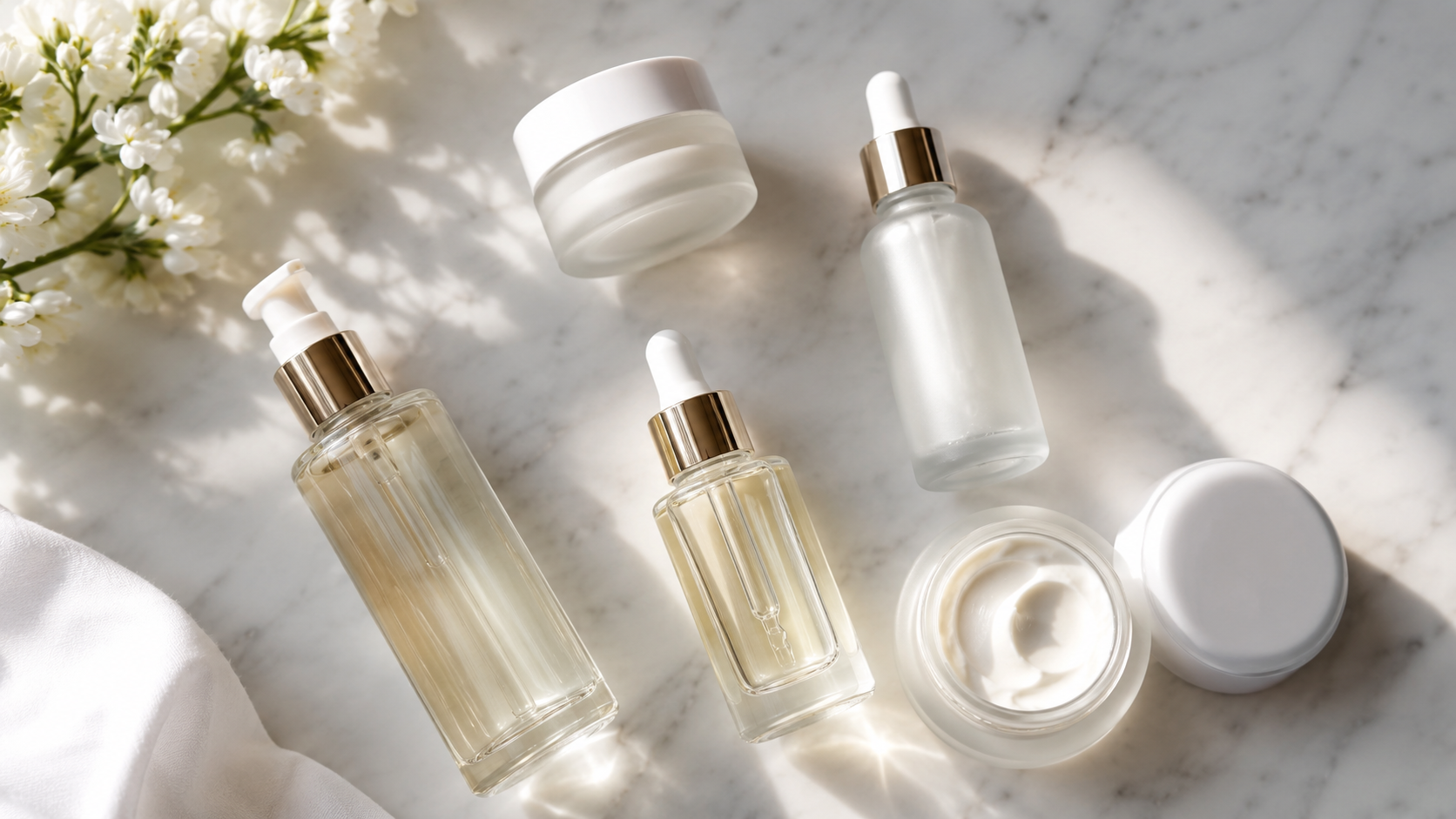
Building a Gentle Daily Routine Around Your H Rosacea Formula
Consistency is the single most powerful tool in your rosacea skincare routine. Here's a practical, dermatologist-aligned structure you can follow daily.
Morning Routine
- Gentle sulfate-free cleanser — lukewarm water only; never hot
- Niacinamide serum — let it absorb for 30–60 seconds before the next step
- H rosacea formula (your calming treatment — azelaic acid, cica, or your chosen blend)
- Mineral SPF 30+ sunscreen — zinc oxide or titanium dioxide preferred; these sit on the skin's surface rather than absorbing into it, making them gentler for sensitive skin
Evening Routine
- Oil balm or micellar cleanser to remove SPF and environmental buildup
- Gentle water-based cleanser as the second step
- Azelaic acid or centella asiatica treatment — apply to affected areas only
- Ceramide-rich moisturizer to seal in repair while you sleep
A few non-negotiable rules to work into every routine:
- Temperature matters: lukewarm water only — hot water dilates capillaries and worsens redness
- Pat, never rub: press your towel gently against your face rather than dragging it
- Layering rule: thinnest consistency first, thickest last, 30–60 seconds between layers
For anyone also working toward smooth, even skin texture alongside managing redness, the same gentleness principles apply — patience and low-manipulation application are your best friends.
Customer story : Many users in this situation report that switching to a single calming serum at night — rather than layering three or four actives — made the most noticeable difference in their redness levels within the first few weeks.
Common Rosacea Triggers to Track and Minimize
Even the best rosacea home treatment formula won't hold up if you're walking headfirst into your triggers every day. Managing rosacea long-term means getting to know what sets your skin off — because triggers vary significantly between individuals.
The Most Common Culprits
Lifestyle triggers:
- UV exposure (consistently the #1 documented trigger — this is why SPF isn't optional)
- Spicy food and hot drinks
- Alcohol, particularly red wine
- Extreme temperature changes — stepping from a warm room into cold air
- Emotional stress
- Intense aerobic exercise (the flushing response is very real)
Skincare triggers:
- Over-exfoliation (even "gentle" chemical exfoliants used too frequently)
- Hot showers and steam
- High-fragrance products (ties directly back to the ingredient avoidance list above)
Environmental triggers:
- Wind and cold air
- Indoor heating and air conditioning (both reduce ambient humidity, drying out the skin barrier)
The American Academy of Dermatology recommends trigger identification as a cornerstone of rosacea management — and the most practical tool for this is a simple rosacea trigger diary. Note flare timing alongside what you ate, the weather conditions, your stress level, and any new products used. Patterns emerge faster than most people expect.
Pairing this diary habit with choosing the right skincare tools for sensitive skin means you're approaching your routine from every angle — not just the product side.

How High-Frequency Technology Complements Your Rosacea Routine
⚠️ Important medical disclaimer: A high-frequency wand is NOT a rosacea treatment. It is not a medical device and cannot diagnose, treat, or cure any skin condition, including rosacea. It should never be used during an active flare, over visibly flushed or inflamed skin, on broken capillaries or active papules, or by anyone whose rosacea has not been assessed by a licensed dermatologist. If you have rosacea, consult your dermatologist before introducing any new skincare tool — including high-frequency devices — into your routine. Individual skin responses vary, and what is tolerable for one person may trigger a significant reaction in another. The information below is provided for general educational purposes only and does not constitute medical advice.
That said — used correctly, at the right time, and only in a confirmed stable phase — it can be a complementary tool within a broader skin wellness routine for some individuals.
What High-Frequency Technology Does
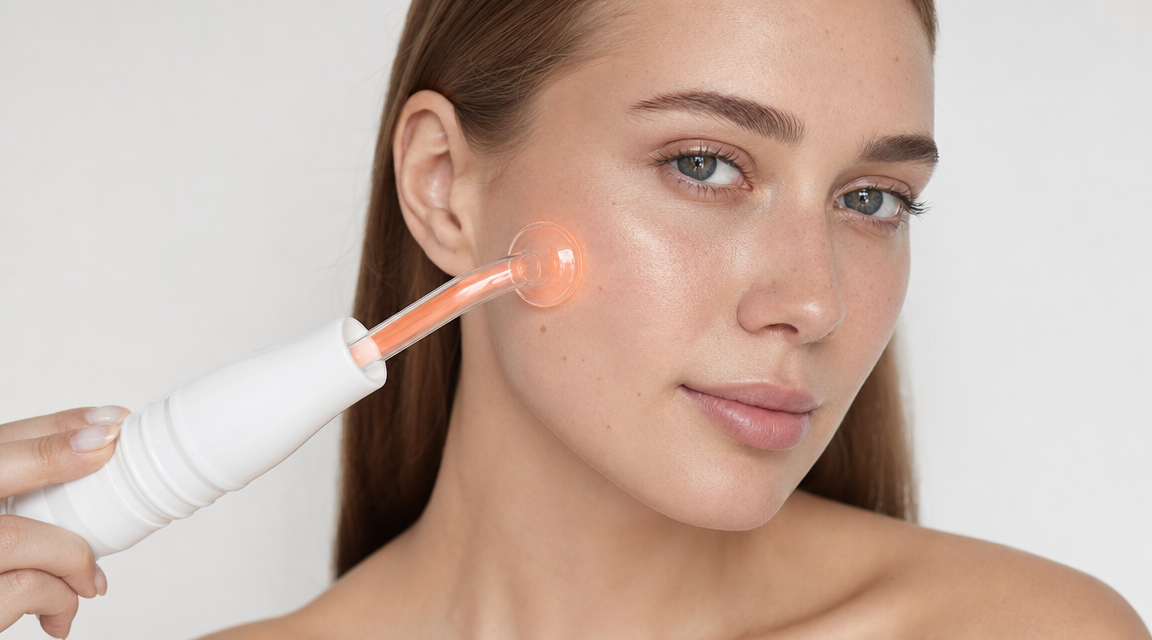
High-frequency wands work by emitting a mild electrical current through a glass electrode. This generates ozone and gentle warmth at the skin's surface, which research suggests may support antibacterial and anti-inflammatory effects in the outermost skin layers. They're commonly used to address surface congestion, dull skin, and uneven texture — concerns that often co-exist with rosacea even in stable phases.
You can learn more about how high-frequency skincare works before deciding if it's right for your current skin phase.
Who May Benefit
This technology is best suited to rosacea users who are in a stable or remission phase and are dealing with secondary concerns — congested pores around the rosacea-affected area, uneven skin texture, or dullness. It is not appropriate for anyone currently experiencing active flushing, visible inflammation, or broken vessels.
Safety Guidelines for Rosacea-Prone Skin
| Rule | Why It Matters |
|---|---|
| Use only on calm, non-flushed skin | Electrical current on inflamed skin can worsen redness |
| Start at the lowest intensity setting | Rosacea skin is already sensitized; minimize all stimulation |
| Limit sessions to 2–3 minutes per area | Less is more — overstimulation can trigger a response |
| Never use over active papules or broken vessels | Risk of worsening inflammation or visible vessel damage |
| Follow every session with a barrier-repairing moisturizer | Restore what the session may have temporarily disrupted |
| Stop immediately and consult a dermatologist if any redness, stinging, or flushing occurs | Rosacea-prone skin can react unpredictably — safety first |
For those in a confirmed stable phase looking for a well-designed at-home option, the high-frequency wand for anti-aging skin support offers gentle, adjustable settings that make it easier to stay within safe parameters — particularly helpful for skin that can't tolerate anything aggressive.
Expert insight : High-frequency technology has been used in professional settings for decades. For sensitive and rosacea-prone skin specifically, the key is always starting with the lowest setting, the shortest session time, and the longest gap between sessions — especially in the first few weeks. When in doubt, do not proceed without professional guidance.
When to See a Dermatologist (and What to Ask)
A well-curated rosacea calming formula and a consistent home routine can absolutely make a meaningful difference. But there are clear signs that at-home care alone isn't enough:
- Redness that worsens despite consistent barrier care for 8+ weeks
- Significant visible blood vessels (telangiectasia) that aren't responding to topicals
- Rhinophyma development (skin thickening, particularly on the nose)
- Eye involvement — redness, dryness, or irritation in and around the eyes (ocular rosacea)
A dermatologist may prescribe topical metronidazole, ivermectin, or brimonidine — all Rx-only treatments that work alongside, not instead of, a gentle home routine.
Questions Worth Bringing to Your Appointment
- "Is my barrier compromised, or is this primarily an inflammatory issue?"
- "Can I safely layer azelaic acid with any prescription you're considering?"
- "Are there ingredients in my current routine that may be worsening my rosacea?"
These conversations are more productive than arriving with a bag of products and asking "are these okay?" — framing your questions around mechanisms helps your dermatologist give you actionable answers.
A note on this article: Everything here is educational information only. Nothing in this guide constitutes medical advice, and no skincare routine — however well-designed — can diagnose or treat a medical condition. When in doubt, consult a licensed dermatologist.
Frequently Asked Questions
Q1: What does the H rosacea formula typically contain?
It generally contains calming, anti-inflammatory actives such as azelaic acid, niacinamide, centella asiatica, and ceramides — designed to reduce redness and reinforce the skin barrier without triggering further irritation. The best formulas keep the ingredient list short to minimize sensitizing risk.
Q2: Can I use a high-frequency wand if I have rosacea?
With significant caution — and only after consulting a dermatologist. If cleared for use, limit it to stable, non-flushing phases, on the lowest setting, and never over actively inflamed or broken skin. If you're unsure whether your skin is calm enough, wait and seek professional advice before proceeding.
Q3: How long does it take for an H rosacea formula to show results?
Most calming formulations require consistent daily use for 4–8 weeks before visible improvement becomes apparent. Barrier-repairing ingredients like ceramides tend to show faster comfort improvements — many users notice reduced tightness and sensitivity within the first 1–2 weeks.
Q4: Is SPF necessary if I'm using an H rosacea formula?
Absolutely. UV exposure is the number-one documented rosacea trigger. A mineral SPF 30+ (zinc oxide or titanium dioxide) applied every morning is non-negotiable — regardless of how good your calming formula is, unprotected sun exposure will continue to drive flares.

About the Author: Calla Winslow
Calla Winslow is a passionate skincare enthusiast and beauty writer based in Los Angeles. With a love for science-backed routines and a deep understanding of sensitive skin, Calla shares expert tips, honest reviews, and practical wellness advice to help readers achieve their healthiest glow.
More skincare tips
View all-

Tube Facial: What It Is, How It Works & Real Be...
Discover what a tube facial really does for your skin, how to do it at home, and which tools actually work. Try it yourself today!
Tube Facial: What It Is, How It Works & Real Be...
Discover what a tube facial really does for your skin, how to do it at home, and which tools actually work. Try it yourself today!
-

Frequency Machines for Skin: What They Do & How...
Discover how frequency machines work for skin, hair & anti-aging. Compare device types, read expert tips, and find the right tool for your routine. Shop now.
Frequency Machines for Skin: What They Do & How...
Discover how frequency machines work for skin, hair & anti-aging. Compare device types, read expert tips, and find the right tool for your routine. Shop now.
-

Professional High Frequency Machine: Complete B...
Wondering which professional high frequency machine is right for you? Discover how they work, key features to compare, and find your perfect at-home match.
Professional High Frequency Machine: Complete B...
Wondering which professional high frequency machine is right for you? Discover how they work, key features to compare, and find your perfect at-home match.
- Choosing a selection results in a full page refresh.
- Opens in a new window.