


Get your package anywhere!

High-Frequency Facial Treatment Near Me: At-Home Guide
If you've been searching for a high-frequency facial treatment near me, you're in good company. These treatments have quietly become one of the most requested services at med spas and esthetics studios — and for good reason. They're non-invasive, surprisingly relaxing, and deliver visible results for everything from stubborn acne to dull, tired skin.
This guide covers exactly what to expect from a professional session, how much it typically costs, and — honestly — whether you even need to leave your house to get the results you're after.
Table of Contents
- What Is a High-Frequency Facial Treatment?
- What Does a High-Frequency Facial Actually Do for Your Skin?
- What to Expect at a Professional High-Frequency Facial Near You
- How Often Should You Get High-Frequency Treatments?
- Can You Get the Same Results at Home? (Honest Comparison)
- How to Do a High-Frequency Facial at Home: Step-by-Step
- Who Should (and Shouldn't) Try High-Frequency Treatments?
- Frequently Asked Questions
What Is a High-Frequency Facial Treatment?
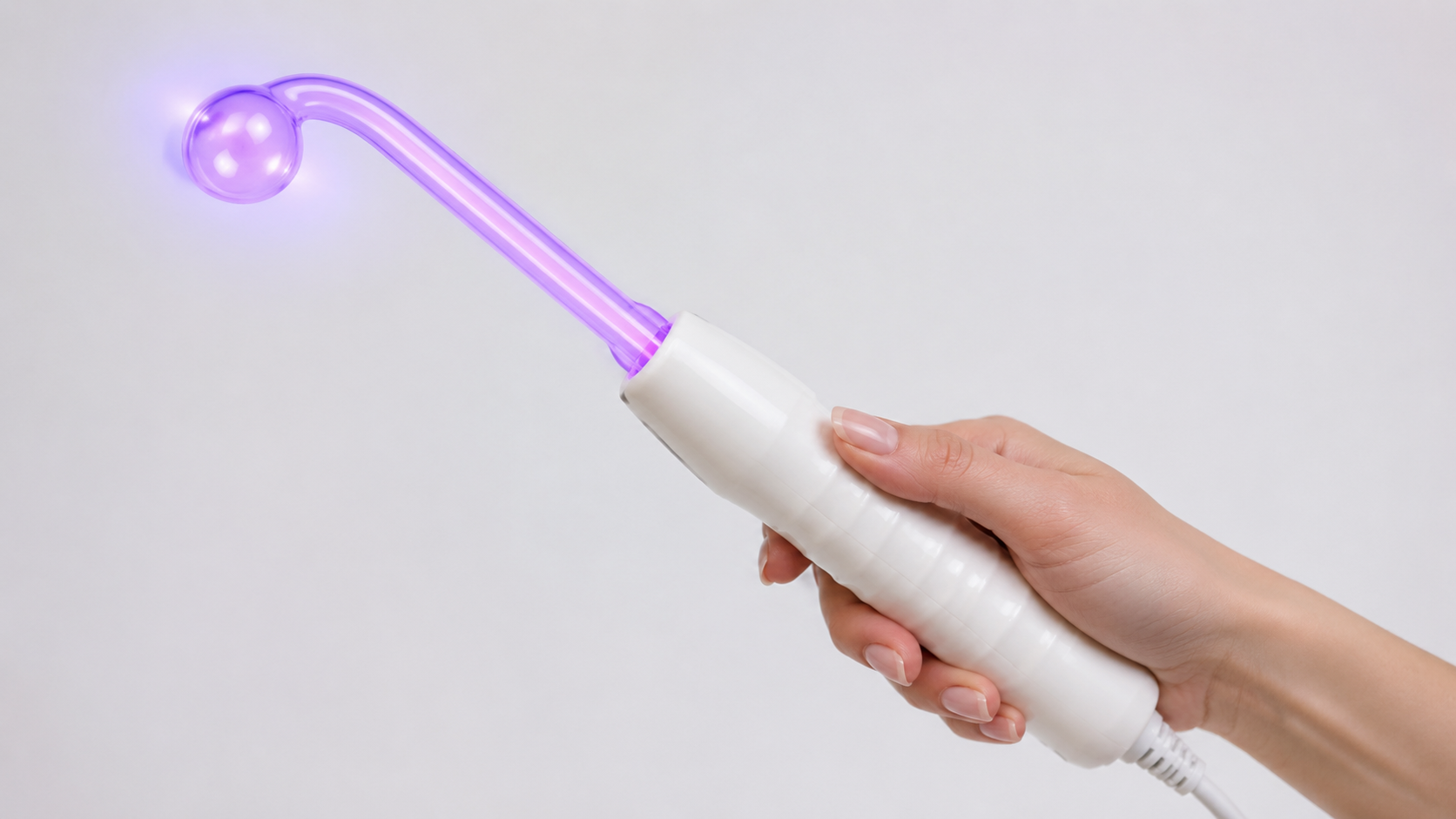
High-frequency technology uses a mild alternating electrical current passed through a glass electrode filled with either argon (violet) or neon (orange) gas. When the electrode makes contact with the skin, it produces ozone — a naturally antibacterial gas — and gently stimulates surface circulation.
The frequency range used in aesthetics typically falls between 50,000 and 250,000 Hz, which sounds intense but is completely safe for skin contact. Estheticians have used high-frequency devices in professional settings for decades, and the technology has since been scaled down for safe, effective home use.
It's worth clarifying one common point of confusion: high-frequency is not the same as microcurrent or radiofrequency (RF). Microcurrent targets deeper muscle tone, and RF works at a thermal level in the dermis. High-frequency works at the skin's surface — focusing on bacterial reduction, circulation, and a short-term energizing effect.
No needles, no heat damage, no downtime. That's part of what makes it so appealing.
What Does a High-Frequency Facial Actually Do for Your Skin?
The benefits of a high-frequency skin treatment are well-supported by both clinical experience and emerging research. Here's what the evidence points toward:
- Reduces the appearance of acne and blemishes — The ozone produced by the electrode has demonstrated antibacterial properties, which may help suppress the P. acnes bacteria responsible for breakouts. Clinical research on electrical current and skin health supports the role of electrical stimulation in antimicrobial outcomes, though the specific mechanism against acne-related bacteria continues to be studied.
- Supports circulation and a temporary glow — The gentle current encourages blood flow to the surface, which many users describe as an immediate brightening effect.
- May help reduce the look of fine lines and puffiness — Improved microcirculation can temporarily minimize under-eye puffiness and give the skin a plumper, more refreshed appearance.
- Stimulates the scalp — When used with a comb electrode, high-frequency treatment may support healthier hair growth conditions by stimulating blood flow to follicles.
Expert insight : Dermatologists generally agree that no single skincare tool replaces a consistent routine. Research suggests high-frequency treatments work best as a complement to a well-rounded regimen — not a standalone cure. Managing expectations and committing to multiple sessions is key to seeing meaningful improvement.
Results are not overnight. Most people notice a temporary glow after the first session, but visible improvements in acne or skin texture typically take 4–6 consistent treatments to become apparent.
What to Expect at a Professional High-Frequency Facial Near You
Booking a professional high-frequency facial near you is straightforward — but knowing what to expect helps you evaluate whether it's worth the investment.
A typical in-clinic session looks like this:
- Cleanse — The esthetician removes all makeup and primes the skin with a gentle cleanser.
- Optional exfoliation — Some providers add a light enzyme peel before the electrical step.
- Electrode glide — The glass electrode is moved slowly across the skin in circular or sweeping motions. You'll feel a gentle tingling and may hear a faint buzzing sound.
- Serum application — A targeted serum (often vitamin C or hyaluronic acid) is applied immediately after to maximize absorption.
- Moisturizer and SPF — The session closes with a hydrating moisturizer and sun protection.
Session duration: Typically 30–60 minutes, depending on whether it's a standalone service or part of a facial package.
Average cost: Expect to pay $75–$150 per session in the US, though prices vary significantly by city and provider type. A medical spa in New York or Los Angeles will charge more than a solo esthetician's studio in a smaller market.
Who offers these treatments:
- Licensed estheticians (state board–certified)
- Medical spas under physician oversight
- Dermatology offices offering cosmetic services
Tips for finding a reputable provider:
- Verify the esthetician holds a current state board license
- Search Google and Yelp for before-and-after photos and mention of consistent results
- Ask whether the device used is FDA-cleared
- Don't hesitate to ask about their experience with your specific skin concern (acne vs. anti-aging vs. scalp)
The quality of the treatment depends enormously on the practitioner's technique and the device wattage — which is one reason many people eventually explore the at-home route.
How Often Should You Get High-Frequency Treatments?
Frequency matters as much as the treatment itself. Here's a practical guide based on setting and skin type:
Professional setting:
- Start with a course of 6–10 sessions, spaced 1–2 weeks apart
- Then shift to monthly maintenance once your skin has responded
At-home setting:
- Most guidance recommends 3–5 sessions per week, each lasting 5–10 minutes
- Always start at the lower end and increase based on your skin's response
By skin type:
| Skin Type | Recommended Frequency | Focus Areas |
|---|---|---|
| Oily / acne-prone | 4–5x per week | T-zone, chin, jawline |
| Dry / sensitive | 2–3x per week | Full face, shorter sessions |
| Anti-aging goals | 4–5x per week | Forehead, crow's feet, neck |
| Scalp / hair growth | 3–4x per week | Full scalp in sections |
Quick tip : If your skin feels overly tight or looks slightly red after a session, reduce frequency by one day per week and shorten session time by 2 minutes. Your skin will tell you what it needs.
Can You Get the Same Results at Home? (Honest Comparison)
Here's the question most people actually want answered: do you really need to book an appointment, or can you replicate this at home?
The honest answer: it depends on your goals — but at-home results are far more attainable than they used to be.
| Factor | Professional Treatment | At-Home Device |
|---|---|---|
| Device wattage | Higher, clinical-grade | Lower, consumer-safe |
| Technique | Trained esthetician | Self-applied (learnable) |
| Combination treatments | Often bundled with peels/LED | Standalone or paired with serums |
| Cost per session | $75–$150 | One-time investment |
| Convenience | Appointment required | Any time, at home |
| Consistency | Limited by schedule/budget | Easy to maintain routine |
| Antibacterial ozone effect | ✅ Yes | ✅ Yes |
| Circulation boost | ✅ Yes | ✅ Yes |
Professional treatments still hold an edge when it comes to wattage, advanced technique, and combination protocols. But for consistent, ongoing maintenance? The gap has narrowed considerably.
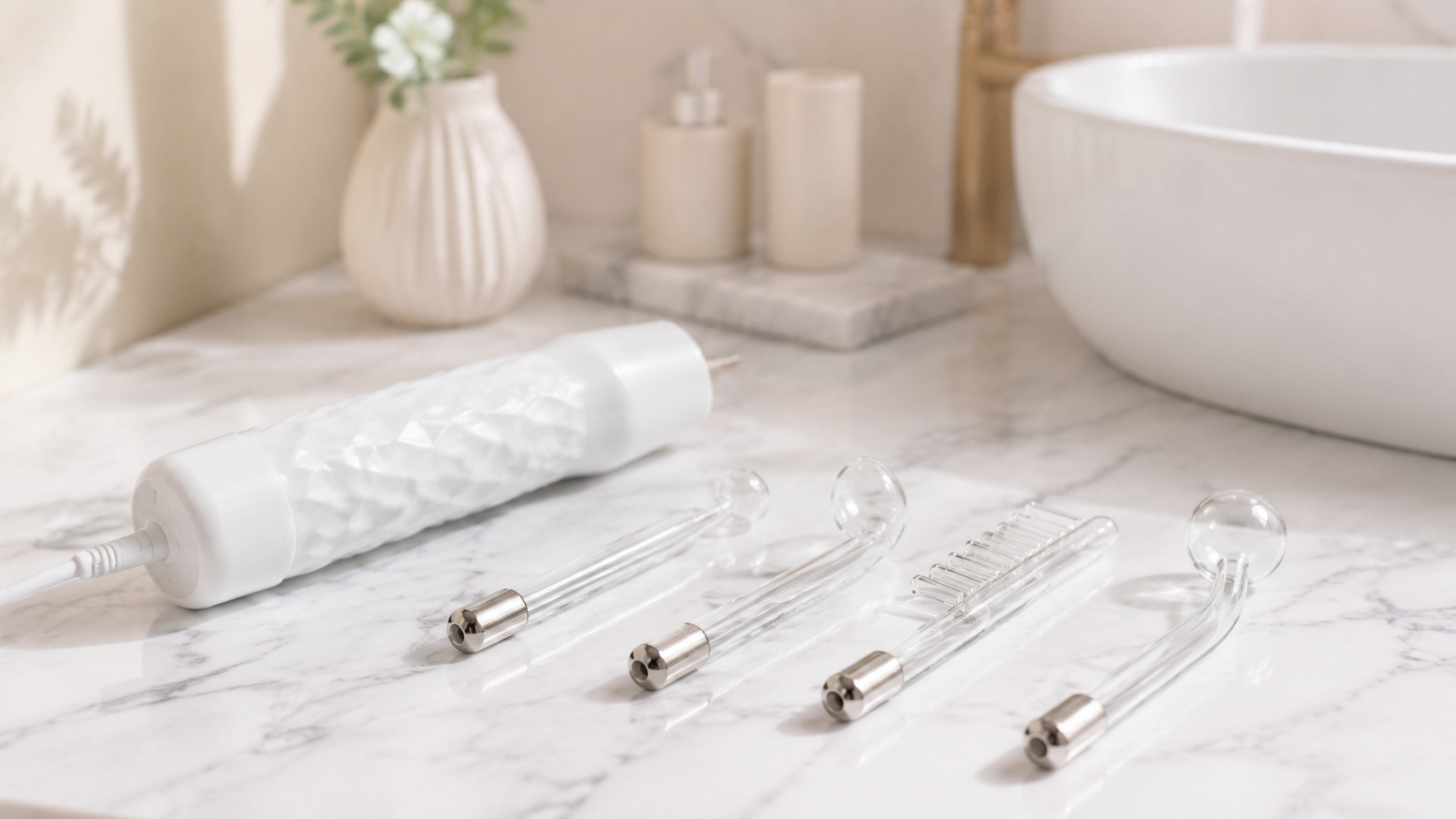
This is exactly where a quality at-home device earns its place in a skincare routine. The high-frequency wand for acne and blemish-prone skin from HighWand bridges the gap — delivering the same ozone-producing, circulation-boosting technology in a device designed for daily home use. It comes with multiple electrode attachments for the face, neck, and scalp, and requires no training to use safely.
When you do the math — $75–$150 per session multiplied by a 6-session starter course equals $450–$900 or more — the case for an at-home device becomes hard to ignore.
How to Do a High-Frequency Facial at Home: Step-by-Step
Using a high-frequency electrode wand at home is genuinely straightforward once you know the basics. Here's how to do it right.
Before you start:
- Cleanse your face thoroughly — remove all makeup, oils, and serums
- Your skin should be dry and product-free before the electrode touches it (residual oil or serum can interfere with the current)
Choose the right electrode:
| Electrode Shape | Best For |
|---|---|
| Mushroom | Cheeks, forehead, full face |
| Bent / curved | Jawline, neck |
| Spot / pointed | Individual blemishes |
| Comb | Scalp and hairline |
During the session:
- Set the device to a low intensity level, especially for your first few uses
- Place the electrode flat against your skin and move it in slow, gliding motions — never hold it stationary in one spot
- Apply very light pressure — let the electrode do the work
- Work in sections: forehead, each cheek, chin, jawline
- Limit each session to 5–10 minutes total
After the session:
- Apply hyaluronic acid serum or a light moisturizer immediately — the skin is primed to absorb actives right after treatment
- Follow with SPF if treating in the morning
What NOT to do:
- Avoid the eyelid area and directly under the eyes
- Do not use on open wounds, active cystic nodules, or broken skin
- Never use with flammable products (aerosols, alcohol-heavy toners) in the immediate vicinity
For more context on choosing the right skincare tool for your skin type, our 2025 guide walks through the full decision-making process.
If skin texture is also a concern alongside acne or aging, the article on how to get smooth, even skin texture naturally pairs well with this treatment approach.
User experiences : People who are new to high-frequency devices often report that the first session feels unexpected — the tingling sensation takes some getting used to. By the third or fourth use, most have settled into a comfortable routine. Individual results and experiences vary, and consistent use over several weeks is generally needed before visible improvements in skin clarity or tone become noticeable.
Who Should (and Shouldn't) Try High-Frequency Treatments?
High-frequency facials are well-tolerated by most adults, but a few important exceptions apply.
Good candidates:
- Adults with acne-prone or oily skin looking for a non-prescription antibacterial option
- People noticing early signs of aging — fine lines, loss of radiance, mild puffiness
- Anyone with dull or uneven skin texture wanting a circulation boost
- Those dealing with scalp concerns or wanting to support hair growth
Use with caution — consult a dermatologist first if you:
- Are pregnant
- Have a pacemaker or any implanted electrical device
- Have active rosacea, eczema flares, or severely broken skin
- Have a history of epilepsy or seizure disorders
- Have metal implants in the treatment area
If you're managing persistent acne and want to understand how tools like this fit alongside a broader treatment plan, consulting with a board-certified dermatologist or licensed esthetician is a useful step. The American Academy of Dermatology's website is a reliable starting point for general guidance on acne treatment options.
Always patch test a new device on a small area of skin before a full session. And read the instruction manual — it takes five minutes and makes the experience significantly safer and more effective.
Frequently Asked Questions
Is a high-frequency facial safe for sensitive skin? Yes, with modifications. Use the lowest intensity setting, limit sessions to 5 minutes, and start with 2x per week. A patch test on the jaw or inner arm before a full session is always a good idea.
How much does a high-frequency facial cost near me? Professionally, expect to pay $75–$150 per session, depending on your city and provider type. At-home devices are a one-time investment that typically pays for itself within two to three professional sessions.
How long before I see results from high-frequency treatment? Most users notice an immediate temporary glow after 1–2 sessions. Meaningful improvement in acne, texture, or fine lines typically appears after 4–6 consistent sessions — whether professional or at home.
Can I use a high-frequency wand every day? Daily use is generally not recommended when you're starting out. The common guidance is 3–5 times per week. If you experience redness, dryness, or increased sensitivity, reduce your frequency and session length.
What's the difference between high-frequency and microcurrent facials? High-frequency generates ozone through an electrical current to target bacteria and surface circulation — the effects are largely topical. Microcurrent works at a much lower frequency and targets facial muscle tone at a deeper level. They serve different goals and can be complementary rather than interchangeable.

About the Author: Calla Winslow
Calla Winslow is a passionate skincare enthusiast and beauty writer based in Los Angeles. With a love for science-backed routines and a deep understanding of sensitive skin, Calla shares expert tips, honest reviews, and practical wellness advice to help readers achieve their healthiest glow.
More skincare tips
View all-

How Long to Use High Frequency Wand on Face: Fu...
Not sure how long to use a high frequency wand on face? Get the exact timing, frequency, and tips to get results safely. Start your routine today!
How Long to Use High Frequency Wand on Face: Fu...
Not sure how long to use a high frequency wand on face? Get the exact timing, frequency, and tips to get results safely. Start your routine today!
-

Signstek Portable High Frequency Wand: Honest R...
Is the Signstek portable high frequency wand right for your skin? Read our honest 2025 breakdown—specs, results & what to look for before you buy.
Signstek Portable High Frequency Wand: Honest R...
Is the Signstek portable high frequency wand right for your skin? Read our honest 2025 breakdown—specs, results & what to look for before you buy.
-

Invaincu Ion Eye Wand: Does It Really Work for ...
Curious about the Invaincu Ion Eye Wand? Discover how ion technology targets dark circles & puffiness — plus smarter at-home alternatives. Read the full guide.
Invaincu Ion Eye Wand: Does It Really Work for ...
Curious about the Invaincu Ion Eye Wand? Discover how ion technology targets dark circles & puffiness — plus smarter at-home alternatives. Read the full guide.
- Choosing a selection results in a full page refresh.
- Opens in a new window.