


Get your package anywhere!

High Frequency Machine Professional: What You Need to Know
You've seen it at your esthetician's clinic — that glass wand crackling with violet or orange light, moving across skin like something out of a science fiction film. It's a high frequency machine, and it's been a professional skincare staple for over a century. Now the same technology is available for home use, and a growing number of women are asking the obvious question: do you actually need to visit a clinic, or can you get real results on your own terms?
This guide breaks down exactly what a high frequency machine professional setup looks like, how the technology works, what it genuinely treats, and how a well-designed at-home device stacks up against a clinic visit.
Table of Contents
- What Is a High Frequency Machine — and Why Do Professionals Use It?
- What Does a Professional High Frequency Machine Actually Treat?
- Professional Machine vs. At-Home Device — What's Actually Different?
- How to Use a High Frequency Device Like a Professional (At Home)
- Choosing the Right High Frequency Wand for Your Skin Concern
- Common Mistakes People Make With High Frequency Machines (And How to Avoid Them)
- Is a Professional High Frequency Treatment Worth the Cost — Or Can You DIY?
- FAQ
What Is a High Frequency Machine — and Why Do Professionals Use It?
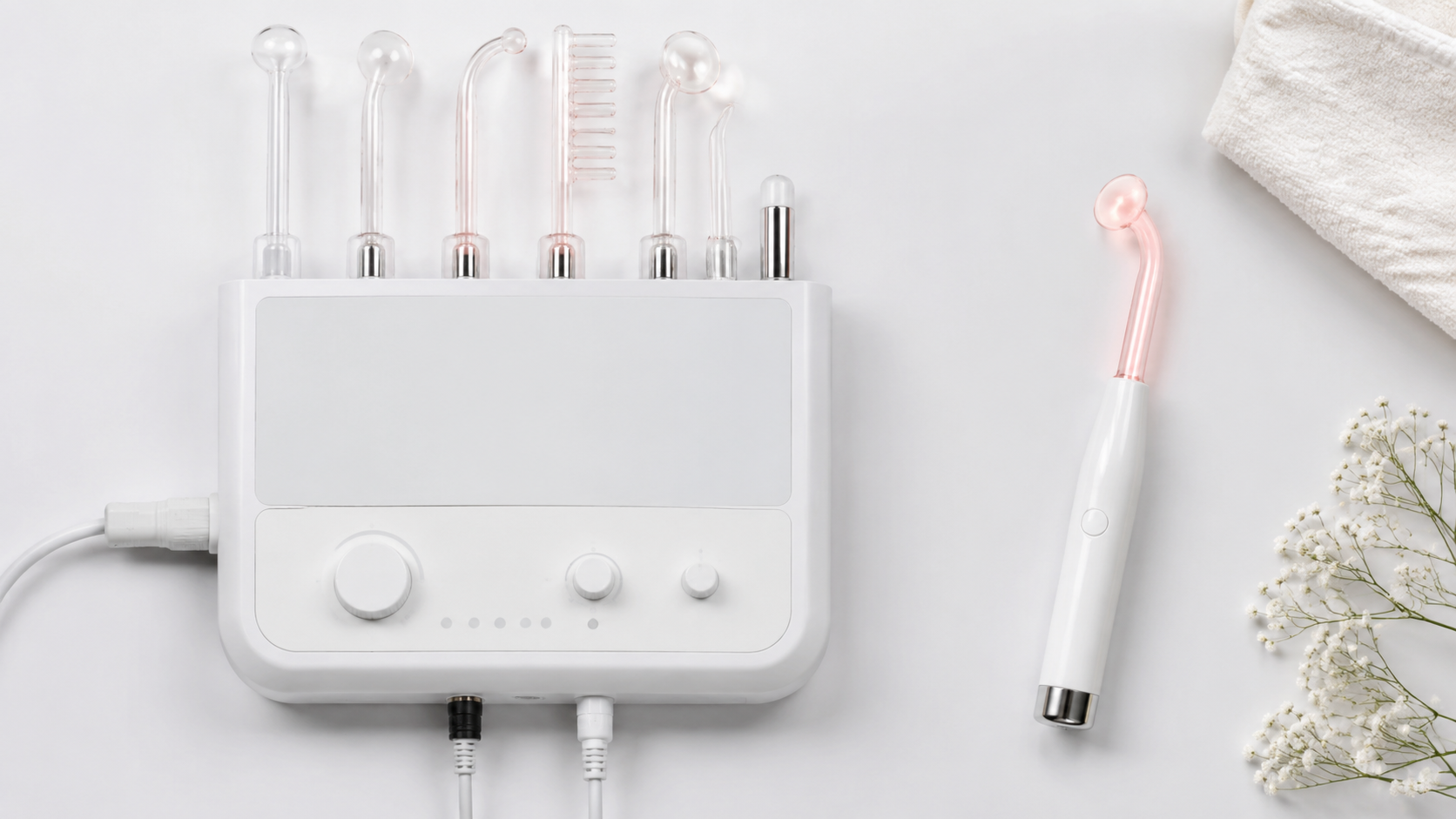
A high frequency machine works by passing a rapidly oscillating electrical current through a sealed glass electrode filled with inert gas. When the electrode contacts the skin (or comes very close to it), it produces a gentle electrical discharge, a small amount of ozone, and warmth that stimulates circulation.
Two gases are most commonly used:
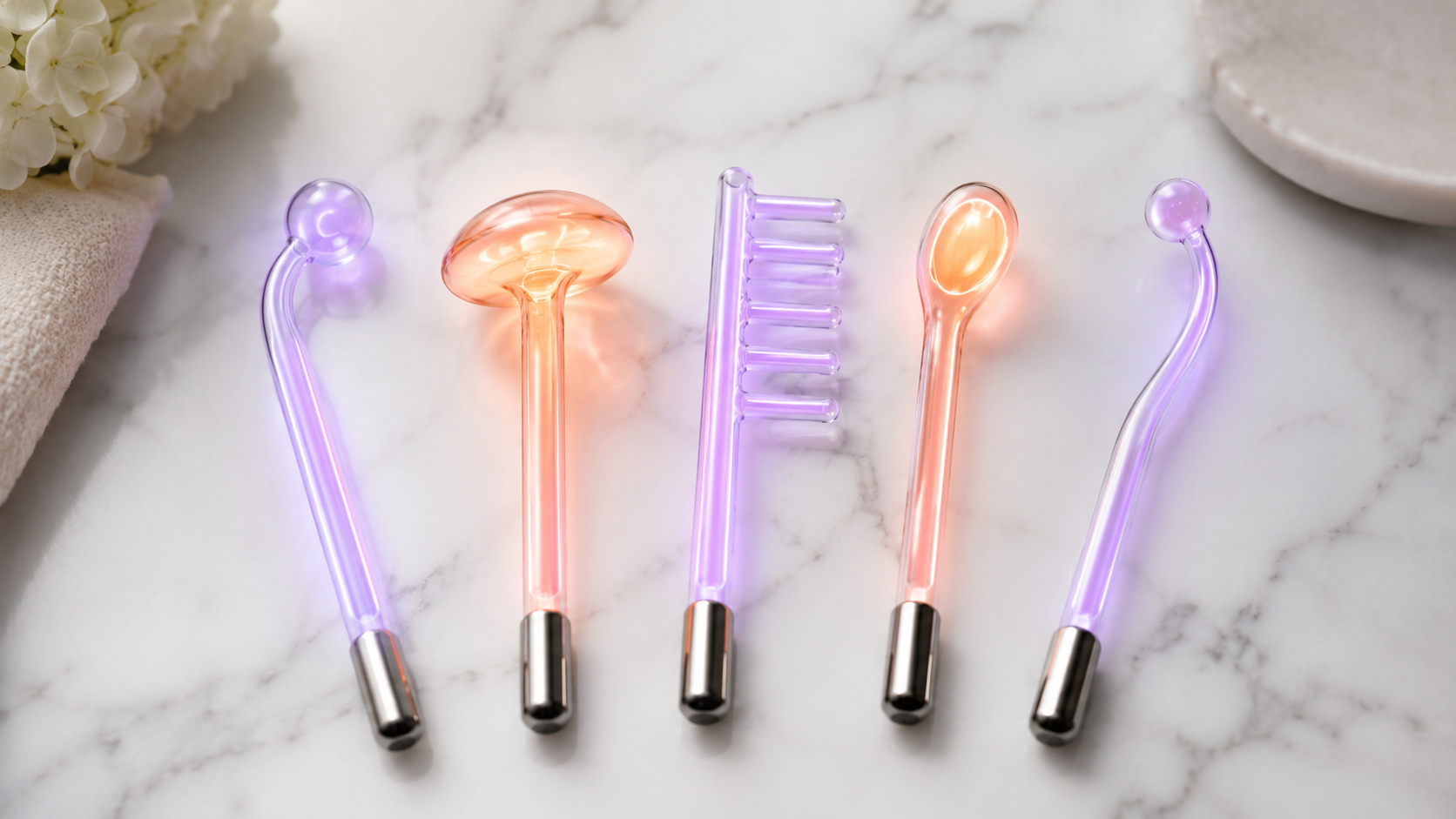
- Argon gas — produces a violet/purple light and is primarily antibacterial. This is the go-to for acne-prone and oily skin types.
- Neon gas — produces an orange/red light and is focused on warming, circulation-boosting effects. Better suited for aging, dull, or dry skin.
The technology has a surprisingly long history. It was originally developed by Nikola Tesla in the late 1800s and was used as a medical device before estheticians adopted it throughout the 20th century. You can read more about its broader scientific context in the Wikipedia article on electrotherapy.
Professional machines in clinics typically operate at higher wattage and broader frequency ranges than consumer devices. This is an honest distinction worth understanding before you buy — but it doesn't mean at-home devices are ineffective. More on that shortly.
What Does a Professional High Frequency Machine Actually Treat?
The versatility of high frequency therapy is a big reason it remains a staple in professional treatment menus. Here are the key skin concerns it addresses:
Acne and breakouts The ozone produced during treatment has a well-documented antibacterial effect on Cutibacterium acnes (formerly P. acnes), the bacteria responsible for inflammatory acne. It also calms redness and swelling around active blemishes. Research published in peer-reviewed dermatology literature supports the antibacterial mechanisms of high-frequency current in skin care contexts.
Anti-aging and skin laxity High frequency therapy may help stimulate collagen and elastin production by improving microcirculation in the dermal layers. Estheticians commonly use it to address fine lines, dullness, and loss of firmness.
Puffiness and dark circles The mild lymphatic drainage effect around the eye area and jawline makes it popular for morning depuffing routines.
Scalp health and hair thinning Increased blood flow to hair follicles is thought to support healthier growth cycles. This is a supportive benefit, not a medical treatment — but it explains why scalp treatments with high frequency have become popular.
Skin tone and texture Regular use may smooth rough patches and contribute to a more even complexion over time.
Expert insight : Dermatologists generally classify high frequency therapy as a low-risk, non-invasive modality. It is not a replacement for prescribed acne medications or medical dermatology, but it is widely considered a safe and useful complementary tool in a consistent skincare routine.
Professional Machine vs. At-Home Device — What's Actually Different?
This is the question most people are really asking. Let's be direct about the differences — and what actually matters.
| Feature | Professional Machine | At-Home Device |
|---|---|---|
| Frequency range | 250,000–2,500,000 Hz | Consumer-safe range (lower intensity) |
| Electrode variety | 8–12+ attachments | Modern kits: 4–7 electrodes |
| Price | $300–$2,000+ | Fraction of the cost |
| Access | Scheduled appointment + travel | Use at home, any time |
| Supervision | Trained esthetician | Self-directed use |
| Safety design | Professional calibration | Built-in lower intensity for unsupervised use |
The core technology — inert gas, glass electrode, oscillating current — is identical. The professional version simply delivers more power and requires trained hands to calibrate it properly. At-home devices are intentionally designed with lower intensity, and that is a feature, not a limitation. It makes consistent, safe daily use possible without supervision.
For deeper context on how the science behind this technology holds up, see high-frequency skincare benefits and how it works on the HighWand blog.
How to Use a High Frequency Device Like a Professional (At Home)
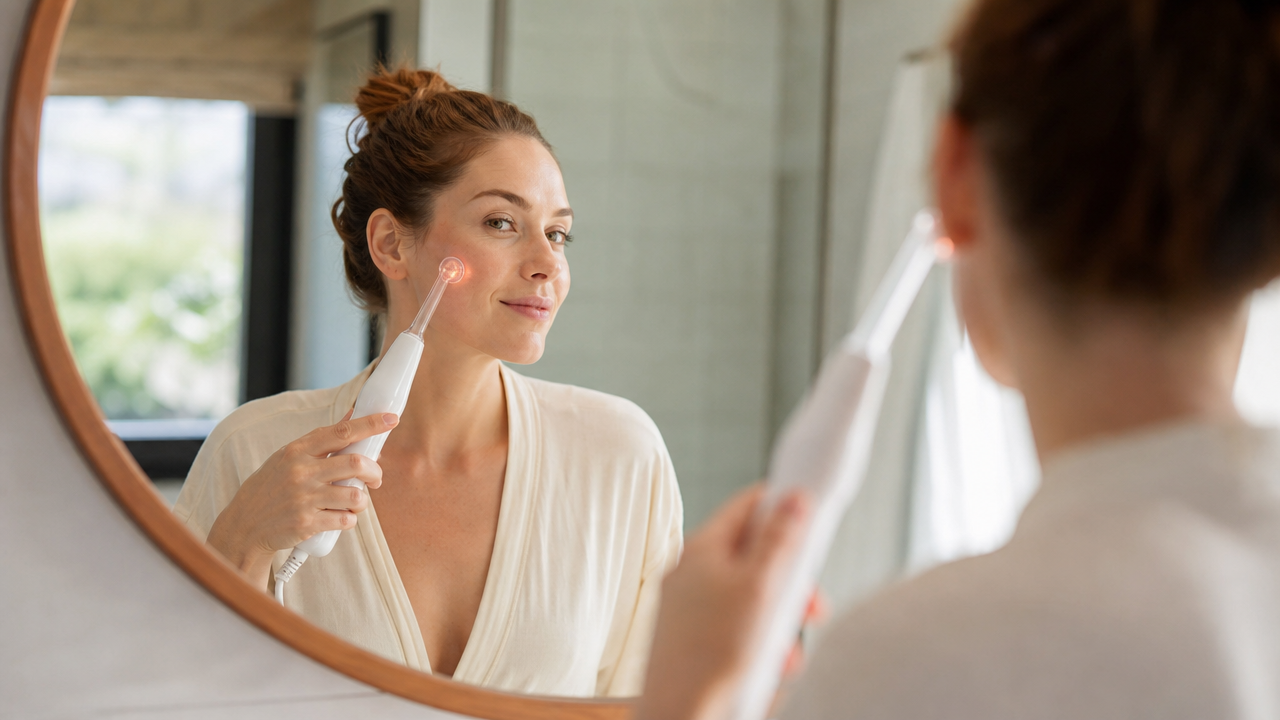
Getting professional-level results at home is largely about following a consistent protocol. Here is how estheticians approach a treatment session, adapted for home use:
- Cleanse thoroughly — skin must be clean and completely dry before the electrode touches it. No oils, serums, or moisturizers during treatment.
- Start on the lowest setting — work up gradually over multiple sessions as your skin adapts.
- Use gauze for the direct method — placing a thin layer of gauze over acne-prone or oily skin reduces discomfort and improves efficacy.
- Keep the electrode moving — use small circular or gliding motions. Never hold the electrode still on one spot.
- Limit session time — 5 to 10 minutes per treatment zone is sufficient.
- Apply products afterward — skin is primed for absorption immediately after treatment. This is the ideal moment for serums and moisturizer.
Recommended use frequency:
- Acne treatment: 3–5 sessions per week
- Anti-aging and wrinkle concerns: 2–3 sessions per week
What to avoid:
- Using over broken skin, open wounds, or active cystic nodules
- Using near metal implants or pacemakers
- Applying vitamin C or other active serums before (not during) treatment
Quick tip : Think of it as your at-home esthetician ritual — consistency beats intensity every time. Shorter, regular sessions outperform infrequent marathon treatments.
If acne is your primary concern, exploring a dedicated high frequency wand for acne-prone skin is a good starting point for finding the right electrode configuration.
Choosing the Right High Frequency Wand for Your Skin Concern
Not all wands are built the same, and electrode choice matters more than most people realize.
For acne-prone skin:
- Look for argon gas electrodes (violet light)
- Mushroom or spot-shaped electrode for targeted blemish treatment
- Adjustable intensity is essential for sensitive, reactive skin
For anti-aging and wrinkle reduction:
- Neon gas electrodes (orange light) for circulation and warmth
- Spoon or curved attachments for lifting motions along the jaw and cheekbones
- Comb electrode for forehead and brow area
For hair and scalp concerns:
- Comb electrode on dry scalp
- Focus on root zones and areas of thinning
- Use before applying scalp serums for enhanced absorption
What certifications and features to look for:
- CE and/or FCC certification
- Auto-shutoff safety feature
- High-quality borosilicate glass electrodes (not cheap imitations)
- Clear intensity dial with multiple levels
Devices like the high frequency wand for anti-aging and wrinkle reduction from HighWand™ are designed with exactly these use cases in mind — multiple electrodes, adjustable settings, and professional-grade glass construction in a compact format.
Common Mistakes People Make With High Frequency Machines (And How to Avoid Them)
Even a good device delivers poor results when used incorrectly. These are the most common mistakes — and how to sidestep them.
Using on inappropriate skin conditions High frequency should never be used over open wounds, active cystic nodules, or severely inflamed skin. When in doubt, skip the area entirely.
Forgetting the gauze For oily or acne-prone skin treated with the direct method, gauze is not optional. Skipping it reduces efficacy and can cause uncomfortable sparking directly on skin.
Applying actives before treatment Vitamin C serums, retinols, and AHAs should be applied after your session, not before. Active ingredients and electrical current are not a good combination on skin.
Pressing too hard The electrode should glide effortlessly across the surface. Pressing it into the skin increases discomfort and does not improve results.
Expecting overnight transformation Consistent use over 4–6 weeks is where the real results appear. Sporadic use every few days will not move the needle.
Overusing in the beginning More sessions do not equal faster results. Skin needs recovery time between treatments, especially when you are starting out.
Customer story : Many users in this situation report jumping in at the highest intensity setting on day one, experiencing redness, and assuming the device "didn't work." Starting low and building gradually is what actually unlocks the results they were looking for.
Is a Professional High Frequency Treatment Worth the Cost — Or Can You DIY?
Let's look at this honestly, because it's the real decision most readers are weighing.
| Professional Clinic Sessions | At-Home Device | |
|---|---|---|
| Cost per session | $50–$150+ | One-time purchase |
| Recommended course | 6–10 sessions | Unlimited sessions |
| Total estimated cost | $300–$1,500 | Fraction of clinic cost |
| Scheduling | Appointments required | Use on your own schedule |
| Guidance | Trained esthetician | Follow device instructions |
| Long-term maintenance | Ongoing cost | No additional cost |
When a clinic visit makes the most sense:
- You have a severe or complex skin condition requiring medical assessment
- You've never tried high frequency before and want expert guidance on your first session
- You're pursuing treatments that genuinely require professional-grade equipment
When an at-home device is the better choice:
- You want to maintain results between clinic visits
- You're building a consistent skincare routine on a budget
- You value the flexibility of treating your skin on your schedule
Some users find the smartest approach is to combine both: start with a professional course to understand your skin's response, then switch to at-home maintenance. There's no rule that says it's one or the other.
For help deciding which device suits your specific skin type, the guide on choosing the right skincare tool for your skin type walks through the decision in detail.
FAQ
Q1: What is the difference between a professional high frequency machine and a home device?
The primary difference is power output and supervision. Professional machines operate at higher wattage and frequency ranges, handled by trained estheticians. At-home devices use the same core technology — inert gas electrodes and oscillating current — but are calibrated to a safe, lower intensity for unsupervised use. This is intentional, not a compromise.
Q2: How often should I use a high frequency machine at home to see results?
For acne-prone skin, 3–5 sessions per week is the standard recommendation. For anti-aging concerns, 2–3 sessions per week is generally sufficient. Most users report visible improvements after 4–6 weeks of consistent use. Realistic expectations and regular sessions matter far more than high intensity.
Q3: Can a high frequency machine help with hair loss?
High frequency scalp treatment works by increasing blood circulation to the hair follicles, which may support healthier growth cycles. It is a complementary, supportive approach — not a medical treatment for clinical hair loss. The High Frequency Wand for Hair Growth & Scalp Health is specifically designed with a comb electrode for scalp application.
Q4: Is it safe to use a high frequency machine every day?
Daily use is not recommended, especially for beginners. Every other day, or 3–5 times per week depending on your skin concern, allows skin adequate recovery time between sessions. Always follow the instructions included with your specific device.

About the Author: Calla Winslow
Calla Winslow is a passionate skincare enthusiast and beauty writer based in Los Angeles. With a love for science-backed routines and a deep understanding of sensitive skin, Calla shares expert tips, honest reviews, and practical wellness advice to help readers achieve their healthiest glow.
More skincare tips
View all-

Invaincu Ion Eye Wand: Does It Really Work for ...
Curious about the Invaincu Ion Eye Wand? Discover how ion technology targets dark circles & puffiness — plus smarter at-home alternatives. Read the full guide.
Invaincu Ion Eye Wand: Does It Really Work for ...
Curious about the Invaincu Ion Eye Wand? Discover how ion technology targets dark circles & puffiness — plus smarter at-home alternatives. Read the full guide.
-

Electrotherapy Facial: Benefits, How It Works &...
Discover what an electrotherapy facial really does for your skin, which concerns it targets, and how to get salon-quality results at home. Read the guide.
Electrotherapy Facial: Benefits, How It Works &...
Discover what an electrotherapy facial really does for your skin, which concerns it targets, and how to get salon-quality results at home. Read the guide.
-

Face Wand for Acne: How High Frequency Wands Re...
Struggling with breakouts? Learn how a face wand for acne uses high-frequency technology to clear skin at home. Shop HighWand™ and start your routine today.
Face Wand for Acne: How High Frequency Wands Re...
Struggling with breakouts? Learn how a face wand for acne uses high-frequency technology to clear skin at home. Shop HighWand™ and start your routine today.
- Choosing a selection results in a full page refresh.
- Opens in a new window.