


Get your package anywhere!

Electrotherapy Facial: Benefits, How It Works & Results
If you've seen "electrotherapy facial" on a spa menu and wondered what it actually means — you're not alone. The name sounds a little intimidating, but the treatment itself is gentle, well-established, and increasingly popular as an at-home skincare routine. This guide breaks down everything: how it works, what it genuinely helps with, and how to replicate professional results without leaving your bathroom.
Table of Contents
- What Exactly Is an Electrotherapy Facial?
- How Does It Work? The Science Behind the Current
- Skin Concerns an Electrotherapy Facial Can Address
- Professional Salon vs. At-Home Electrotherapy: What's the Real Difference?
- How to Do an Electrotherapy Facial at Home with the HighWand (Step-by-Step)
- What Results Can You Realistically Expect (and When)?
- Is an Electrotherapy Facial Right for You? (Quick Checklist)
- Frequently Asked Questions
What Exactly Is an Electrotherapy Facial?
Electrotherapy in skincare refers to the application of low-level electrical currents or high-frequency electrical energy to the skin surface. It's an umbrella term that covers several distinct modalities, including microcurrent, galvanic, TENS-based facial treatments, and — most commonly in beauty retail — high-frequency therapy.
In practice, when a spa menu or beauty influencer says "electrotherapy facial," they often mean a high-frequency facial specifically. The terms are used interchangeably enough that it's worth knowing they describe the same treatment in most consumer contexts.
The concept isn't new. Electrical stimulation in aesthetics dates back to the early 20th century, when high-frequency devices were already being used in professional skincare settings. What's changed is the technology: today's devices are safer, more refined, and genuinely accessible for home use.
The reassuring truth? It sounds far more dramatic than it feels.
How Does It Work? The Science Behind the Current
A high-frequency electrotherapy facial uses an alternating electrical current — typically in the range of 100,000 to 250,000 Hz — delivered through a glass electrode filled with either argon (violet glow) or neon (orange glow) gas.
When the electrode contacts the skin, the current energizes oxygen molecules near the surface. This generates a small amount of ozone, which has a well-documented bactericidal effect — directly relevant to acne-prone skin. At the same time, the mild thermal energy increases local circulation, supporting nutrient delivery and temporarily reducing puffiness.
Research published in peer-reviewed dermatology literature indicates that electrical stimulation of skin tissue can promote fibroblast activity — the cells responsible for producing collagen and elastin — suggesting that repeated sessions may support collagen synthesis over time.
There are two application methods worth knowing:
- Direct application: the electrode glides directly over the skin — most common for acne and general facial use
- Indirect application: the client holds the electrode while the therapist massages, creating a diffuse current effect
The sensation? Most people describe it as a light tingling warmth — not painful, not alarming.
Expert insight : Dermatologists generally frame high-frequency devices as a complementary tool rather than a standalone treatment. The cumulative effect of regular, low-intensity stimulation over weeks is where the real benefit lies — not in a single dramatic session.
Skin Concerns an Electrotherapy Facial Can Address
An electrotherapy skin treatment isn't a one-trick tool. Here's what the evidence and professional consensus support:
Acne and clogged pores The ozone produced during high-frequency treatment kills Cutibacterium acnes (the bacteria behind breakouts) and reduces local inflammation. This is one of the most evidence-supported benefits.
Dull, uneven skin tone Improved micro-circulation delivers a temporary but noticeable glow. Over consistent sessions, it may also support cell turnover for a more even complexion.
Fine lines and early signs of aging Repeated facial electrical stimulation may support collagen and elastin production over time. This is cumulative — not an overnight transformation.
Puffiness and fluid retention The mild stimulation creates a lymphatic-drainage-like effect, particularly around the jaw and under-eye area. Great for mornings when your face needs a reset.
Scalp health High-frequency wands are also used on the scalp to stimulate follicles and improve circulation — a lesser-known but genuinely useful application worth exploring.
What electrotherapy does NOT treat well:
- Deep, established wrinkles
- Hyperpigmentation and dark spots
- Atrophic scarring
- Active skin infections or open wounds
Being honest about limitations is what builds trust — and helps you get the most from the treatment by using it where it actually works.
Professional Salon vs. At-Home Electrotherapy: What's the Real Difference?
The honest answer: the machine power and the operator expertise — not the fundamental mechanism.
| Factor | Professional Salon | At-Home Device |
|---|---|---|
| Machine power | Higher-output, medical-grade | Consumer-safe, lower output |
| Session cost | £60–£150 per session | One-time device investment |
| Frequency | Every 2–4 weeks typically | 3–4x per week possible |
| Customization | Trained therapist, tailored protocol | Self-guided with attachments |
| Accessibility | Appointment required | Any time, at home |
| Long-term cost | High (ongoing) | Cost-effective |
Dermatologists generally agree that regular at-home maintenance between professional sessions is valid. The cumulative micro-stimulation from consistent home use can deliver meaningful results — particularly for acne and skin texture — when applied correctly.
Is it safe to do at home? Yes — when used as directed, on intact skin, with awareness of contraindications.
Contraindications to be aware of:
- Pregnancy
- Pacemaker or implanted electrical devices
- Active rosacea flare
- Open wounds or active skin infections
- Metal implants near the treatment area
- Epilepsy
The American Academy of Dermatology provides guidance on at-home skin devices and recommends consulting a dermatologist if you have any underlying skin conditions before starting a new device routine.
This article is for informational purposes only and is not a substitute for professional medical or dermatological advice.
How to Do an Electrotherapy Facial at Home with the HighWand (Step-by-Step)
Think of this like a gym routine for your skin. Consistency and technique matter more than intensity.
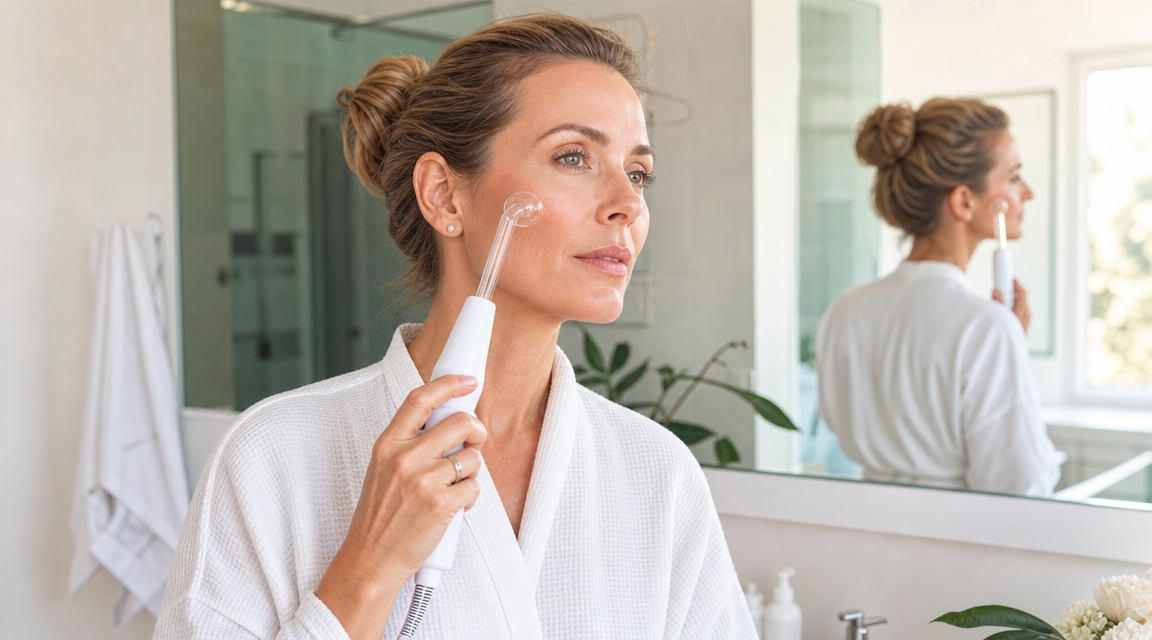
Before you start: Cleanse thoroughly and remove all makeup. Your skin should be dry — not damp — before high-frequency use.
Step 1 — Choose your electrode
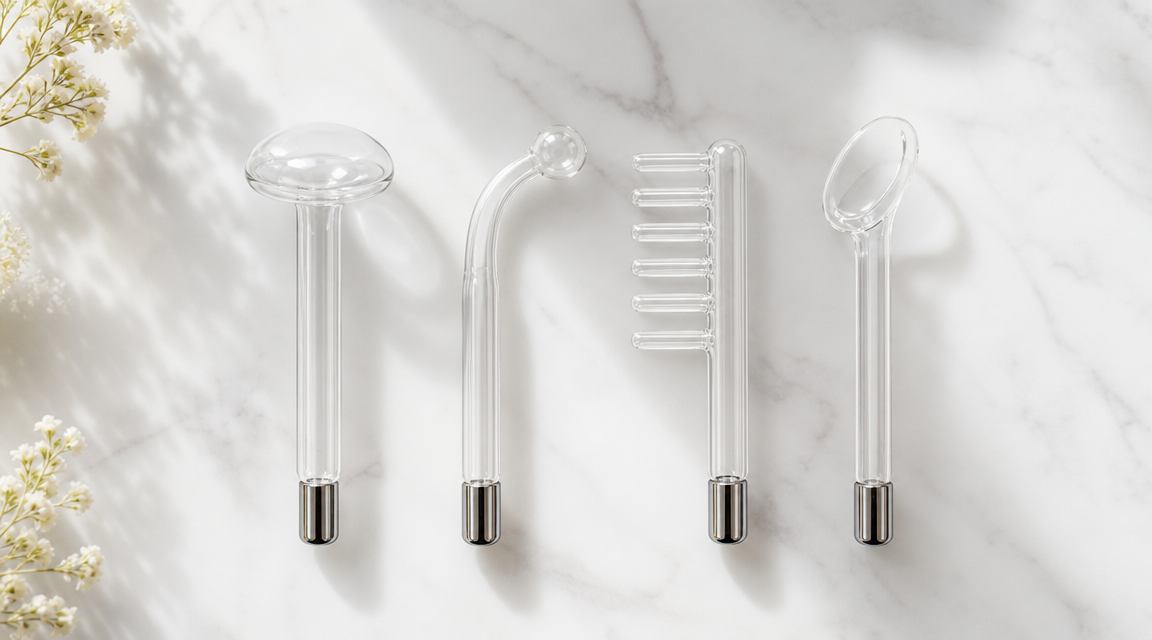
- Mushroom electrode: broad facial areas (cheeks, forehead)
- Bent or curved electrode: targeted spots, blemishes, chin
- Comb attachment: scalp and hairline
Step 2 — Set your intensity Start on the lowest setting, especially for your first session. You can gradually increase as your skin acclimates over the following sessions.
Step 3 — Move continuously Glide the electrode in small circular or flowing motions. Never hold it static on one spot — this prevents over-stimulation.
Step 4 — Work zone by zone Spend 1–2 minutes per zone: forehead, left cheek, right cheek, chin, and jawline. Total facial session: 8–10 minutes maximum.
Step 5 — Follow with skincare Apply your serum or moisturizer immediately after treatment. Skin absorption is enhanced post-session, making this the ideal moment to apply actives.
Frequency guide:
- Acne concerns: 3–4 sessions per week
- Anti-aging goals: 2–3 sessions per week
The high frequency wand for anti-aging and wrinkle reduction is designed specifically for this kind of at-home facial routine — with multiple electrode options and adjustable intensity to suit different skin types and goals.
Quick tip : Always apply a thin layer of gauze or tissue between the electrode and your skin if you experience any sensitivity in the first week — this slightly softens the current delivery while your skin adjusts.
What Results Can You Realistically Expect (and When)?
Timelines matter — and honesty here makes the difference between satisfaction and disappointment.
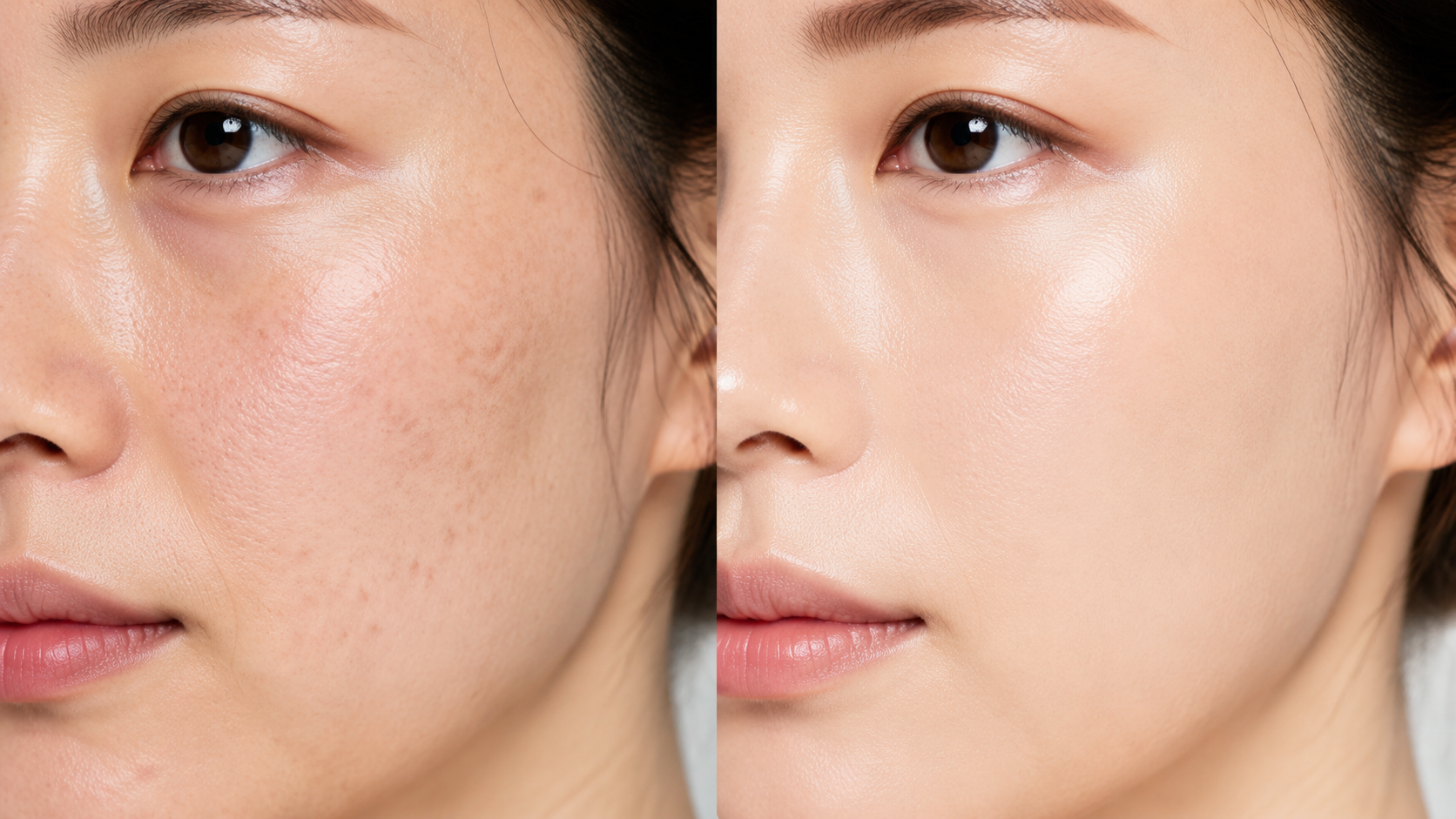
Session 1: Immediate glow, slight pore tightening, a sense of freshness. Think of this as the opening act.
Weeks 2–4: Reduced breakout frequency, clearer overall skin tone, less congestion. This is where acne-prone users tend to notice the biggest shift.
6–8 weeks of consistent use: Visible improvement in skin texture, softer fine lines, a more even complexion. Collagen-supporting effects are cumulative.
What affects your results:
- Skin type, age, and baseline condition
- Consistency of sessions
- Skincare products used alongside treatment
Pairing tip: Hyaluronic acid, vitamin C, and niacinamide all work well with high-frequency treatment. Avoid applying retinol, AHAs, or BHAs immediately before a session — wait until the following morning if you use them regularly.
For a deeper dive into the science behind these effects, the article on high-frequency skincare benefits and how it works covers the mechanism in more detail.
Customer story : Many users in this situation report that the first two weeks feel subtle — and then suddenly, around week three, their skin feels noticeably calmer and brighter. The consistency is what unlocks the results.
Is an Electrotherapy Facial Right for You? (Quick Checklist)
You're a good candidate if you have:
- Acne-prone or congested skin
- Dull, uneven skin tone
- Early fine lines and loss of firmness
- Oily or combination skin
- Mild puffiness or poor circulation
Approach with caution or avoid if you have:
- Active skin infections or broken skin
- Pregnancy
- A pacemaker or implanted electrical device
- Severe active rosacea
- Epilepsy
- Metal implants near the treatment area
The patch-test principle: Always test a small area (inner wrist or behind the ear) before your first full facial session with any new device.
If you're uncertain whether electrotherapy is appropriate for your skin, a brief consultation with a dermatologist or licensed aesthetician is the most straightforward way to get a personalized answer. Most are familiar with high-frequency devices and can advise quickly.
If acne is your primary concern, the high frequency wand for acne and clearer skin is worth exploring — it's designed with the specific attachments and ozone-generating function most effective for breakout-prone skin.
You might also find useful context in these natural face and neck rejuvenation techniques that pair well with a regular high-frequency routine.
Frequently Asked Questions
What is the difference between an electrotherapy facial and a microcurrent facial?
Microcurrent uses very low-level DC current that targets muscle tone and facial contouring. Electrotherapy (high-frequency) uses AC current at a much higher frequency, targeting the skin surface, pores, bacteria, and circulation. They work via different mechanisms and deliver different benefits — microcurrent is more about lift, high-frequency is more about clarity and skin health.
How often should I get an electrotherapy facial for best results?
At a professional salon: once every 2–4 weeks is standard. At home with a device: 3–4 times per week for acne concerns, 2–3 times per week for anti-aging goals. Consistency matters more than frequency.
Does an electrotherapy facial hurt?
No. The typical sensation is described as a light tingling or gentle warmth — sometimes a faint crackling sound if the electrode passes over fine hair. Starting on the lowest intensity setting is always recommended, especially for first-time users.
Can I use an electrotherapy facial if I have sensitive skin?
Generally yes, with a few adjustments: start on the lowest intensity, keep initial sessions short (under 5 minutes total), and avoid applying the electrode directly over any actively irritated or broken areas. If you have a diagnosed skin condition, consult your dermatologist first.
Can I combine electrotherapy with my existing skincare products?
Yes — with one timing rule. Avoid applying strong actives (retinol, AHAs, BHAs) immediately before a session, as the mild electrical current can increase penetration in ways that may cause sensitivity. Apply your serums and moisturizers after the session for maximum absorption and benefit.

About the Author: Calla Winslow
Calla Winslow is a passionate skincare enthusiast and beauty writer based in Los Angeles. With a love for science-backed routines and a deep understanding of sensitive skin, Calla shares expert tips, honest reviews, and practical wellness advice to help readers achieve their healthiest glow.
More skincare tips
View all-

Face Wand for Acne: How High Frequency Wands Re...
Struggling with breakouts? Learn how a face wand for acne uses high-frequency technology to clear skin at home. Shop HighWand™ and start your routine today.
Face Wand for Acne: How High Frequency Wands Re...
Struggling with breakouts? Learn how a face wand for acne uses high-frequency technology to clear skin at home. Shop HighWand™ and start your routine today.
-

High Frequency Argon vs Neon: Which Gas Is Righ...
Argon or neon for high frequency skincare? Discover the real differences, skin benefits, and which electrode to choose. Find your match today!
High Frequency Argon vs Neon: Which Gas Is Righ...
Argon or neon for high frequency skincare? Discover the real differences, skin benefits, and which electrode to choose. Find your match today!
-

Argon vs Neon High Frequency Wands: Which Is Ri...
Argon vs neon high frequency wands — discover how each gas works, which skin concerns they target best, and how to choose. Read the full comparison guide.
Argon vs Neon High Frequency Wands: Which Is Ri...
Argon vs neon high frequency wands — discover how each gas works, which skin concerns they target best, and how to choose. Read the full comparison guide.
- Choosing a selection results in a full page refresh.
- Opens in a new window.