


Get your package anywhere!

Face Wand for Acne: How High Frequency Wands Really Work
If you've been dealing with persistent breakouts, you've probably searched for something that actually works without an expensive dermatologist bill every month. A face wand for acne — specifically a high-frequency wand — has become one of the most talked-about at-home acne treatment devices in recent years. But does the technology hold up, or is it just another gadget collecting dust on your vanity? This guide breaks down exactly how it works, who it's for, and how to use it effectively.
Table of Contents
- What Is a Face Wand for Acne, and How Does It Work?
- The Science Behind High-Frequency and Acne Reduction
- Who Can Benefit From a Face Wand for Acne?
- How to Use a Face Wand for Acne: Step-by-Step Routine
- Combining Your Face Wand With the Right Skincare Products
- Realistic Results: What to Expect and When
- Frequently Asked Questions
What Is a Face Wand for Acne, and How Does It Work?
A face wand is a handheld device that passes a low-level, high-frequency electrical current through a glass electrode. When you glide it across your skin, it creates a gentle buzzing sensation and produces visible light through the glass tube. It sounds high-tech, but the principle is surprisingly straightforward.
Two main mechanisms drive the results:
- Ozone production: The electrical current reacts with the oxygen in the air to generate trace amounts of ozone, which has well-documented antimicrobial properties. This is the key mechanism for targeting acne-causing bacteria.
- Thermal stimulation: The mild warmth generated under the electrode increases local blood circulation, helping the skin's natural repair process kick in more efficiently.
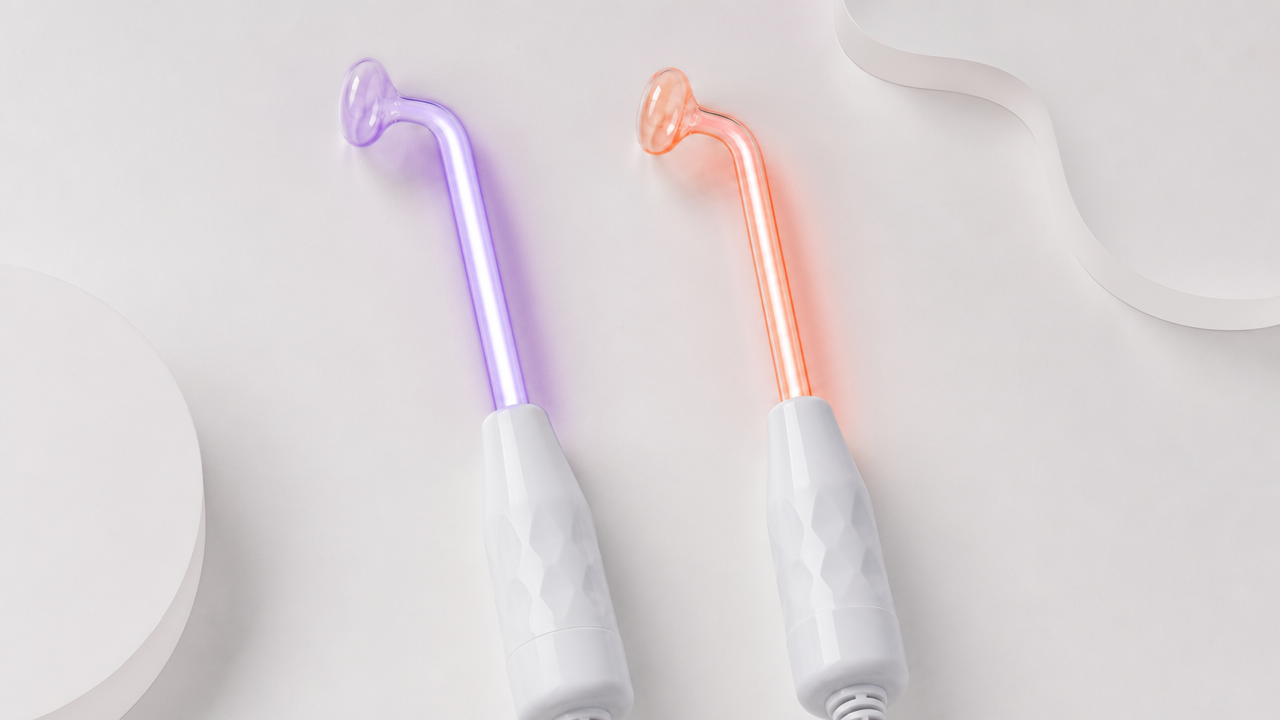
The electrodes themselves come in different types, and the color matters:
| Electrode Type | Gas Inside | Primary Use |
|---|---|---|
| Violet / Argon | Argon gas | Acne treatment, oily/congested skin |
| Orange / Neon | Neon gas | Anti-aging, wrinkle reduction, fine lines |
For acne specifically, you always want the violet/argon electrode. The anti-aging neon electrode serves a different purpose entirely.
This technology isn't new. High-frequency electrotherapy has roots in early 20th-century medicine and was used in clinical settings long before at-home devices became available. What has changed is the accessibility — compact, consumer-friendly devices now bring that same core technology into your bathroom.
The Science Behind High-Frequency and Acne Reduction
The central question is: why would high-frequency therapy help with acne? The answer lies in the bacteria involved.
Inflammatory acne is largely driven by Cutibacterium acnes (formerly called Propionibacterium acnes or C. acnes), an anaerobic bacterium that thrives in clogged, oxygen-poor pores. The ozone generated by a violet electrode wand creates an inhospitable environment for these bacteria — without the harsh side effects that topical antibiotics can sometimes cause.
Research indexed on PubMed on the antimicrobial effects of ozone in dermatological applications supports the principle that ozone exposure can reduce bacterial load on skin surfaces. While large-scale clinical trials specifically on consumer-grade high frequency skin devices are still limited, dermatologists generally acknowledge the anti-inflammatory and antibacterial rationale behind the technology.
Expert insight : Ozone's antimicrobial properties are well-established in medical research. The key distinction is that a high-frequency wand for acne targets the skin's surface environment — reducing bacteria and inflammation — rather than working at the cellular level like prescription treatments. Think of it as a supportive, evidence-informed tool rather than a standalone cure.
The gentle thermal effect also plays a role. Mild warming around an active pimple can help reduce localized swelling and redness, making breakouts less visible while the skin heals. This is why many users describe their skin looking calmer the morning after a session.
The combination of the ozone wand for acne's antibacterial action and improved microcirculation is what makes the high frequency facial wand stand out from purely topical approaches. To dive deeper, check out the science-backed benefits of high-frequency skincare on the HighWand™ blog.
Who Can Benefit From a Face Wand for Acne?
The ideal candidate is an adult — often a woman between 25 and 55 — dealing with hormonal acne, stress-triggered breakouts, or the frustrating persistence of post-adolescent acne. This profile is extremely common: adult acne affects a significant portion of women well into their 40s, and many find that conventional teenage acne treatments are too harsh for their skin.
A face wand for hormonal acne fits neatly into this gap. It's gentler than prescription-strength topicals, and you can use it at home on your own schedule — no appointments, no waiting rooms, and no clinic fees adding up over time.
Skin types that tend to respond well include:
- Oily skin — prone to congestion and bacterial buildup
- Combination skin — oily T-zone with breakout-prone areas
- Congested skin — clogged pores, blackheads, recurring pimples
The cost comparison with professional treatments is also worth noting. In-office high-frequency facials can run $75–$150+ per session, and most practitioners recommend a series of treatments. A quality at-home acne wand device spreads that investment across hundreds of sessions.
⚠️ Caution — who should consult a dermatologist before use:
- Pregnant women
- People with epilepsy or seizure disorders
- Anyone with a pacemaker or electronic implants
- People with active rosacea, open wounds, or severely broken skin
- Those on photosensitizing medications
If you have a diagnosed skin condition, always check with your dermatologist before adding any new device to your routine.
For most healthy adults, at-home use with a quality device is considered safe when instructions are followed carefully.
How to Use a Face Wand for Acne: Step-by-Step Routine
Consistency and technique matter more than session length. Here's how to get the most out of your violet electrode wand acne routine:
Step 1 — Prep your skin Cleanse thoroughly and pat completely dry. Moisture conducts electricity in unpredictable ways, and damp skin increases the risk of irritation. This step is non-negotiable.
Step 2 — Choose your electrode Attach the violet/argon electrode to your device. This is the acne-targeting glass tube — the one that glows purple when activated.
Step 3 — Glide over problem zones Set the device to a low or medium intensity, then glide the electrode slowly over your forehead, chin, and jawline. Use smooth, circular or linear motions. Spend 3–5 minutes on your full-face routine.
Step 4 — Spot treat active pimples For individual breakouts, hover the electrode directly over the pimple for 10–15 seconds. The concentrated ozone exposure targets the bacteria at the source. Do not exceed 15 seconds on one spot.
Step 5 — Finish and layer After your session, apply a calming serum or light moisturizer. Avoid heavy occlusive balms immediately after, as your skin needs a moment to settle.
Recommended frequency: 3–4 times per week. Avoid daily use on actively inflamed areas, as over-stimulation can cause sensitivity.
Quick tip : Short, consistent sessions outperform occasional marathon treatments every time. Set a 3-day reminder on your phone and keep the wand on your vanity where you'll see it — out of sight means out of routine.
The HighWand™ high-frequency wand for acne is designed with this exact routine in mind — both the violet acne electrode and the step-by-step usage guide are included, making it easy to start from day one.
Combining Your Face Wand With the Right Skincare Products
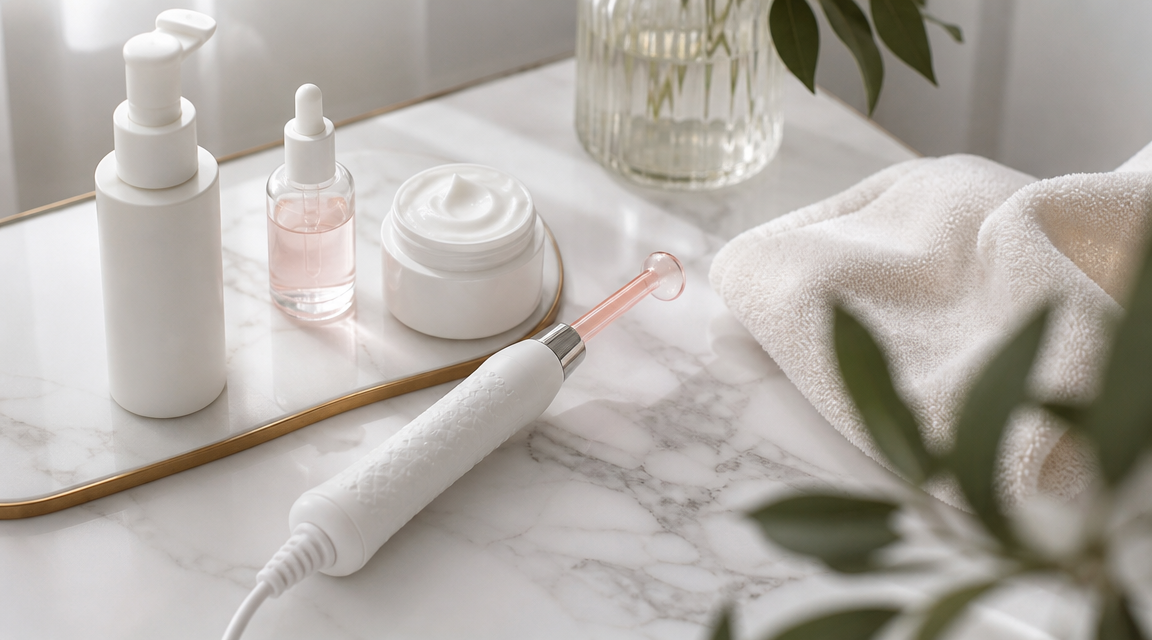
A high frequency facial wand works best as part of a routine, not as a standalone fix. Think of it as the engine — the products you apply around it are the fuel.
Before your wand session: A salicylic acid or niacinamide-based cleanser helps prep congested skin by clearing excess sebum and keeping pores clear. Use this as your pre-wand cleanse.
After your wand session: This is the ideal moment to layer actives. Skin circulation is slightly elevated, making it more receptive to absorbing what you apply next. A hyaluronic acid serum to layer after your session is a great option — it replenishes moisture without clogging pores or conflicting with the electrical treatment.
Ingredients to avoid using directly alongside the wand:
- Benzoyl peroxide — increases irritation risk when combined with electrical current
- Retinol — too sensitizing to pair with thermal stimulation
- AHA/BHA acids — save these for alternate evenings, not wand nights
The ideal order in your routine looks like this:
- Cleanse (salicylic acid or niacinamide)
- Pat completely dry
- High-frequency wand session
- Hyaluronic acid or calming serum
- Light moisturizer
Keeping product layering beginner-friendly is key. You don't need to overhaul your entire cabinet — just be mindful of what goes on before and after the device.
Realistic Results: What to Expect and When
Honesty matters here. A skincare wand for blemishes is not a magic eraser, and it won't clear your skin overnight.
Most users notice a reduction in redness and fewer new breakouts within 2–4 weeks of consistent use. The device works by changing the environment that allows acne to thrive — reducing bacteria, calming inflammation, and improving circulation — rather than acting like a topical medication that directly suppresses a biological process.
Why might it not be working for you?
- Using the wand on damp or product-covered skin
- Skipping sessions (inconsistency is the number-one reason results stall)
- Expecting results in days rather than weeks
- Using the wrong electrode type for your concern
Results genuinely vary by skin type, acne severity, hormonal factors, and how consistently you follow your routine. The American Academy of Dermatology notes that even clinically proven acne treatments typically take 6–8 weeks before meaningful improvement is visible — at-home devices operate in a similar timeframe.
Customer story : Many users in this situation report that the turning point came around week three, when they stopped expecting overnight results and simply committed to three sessions a week. The breakouts didn't vanish, but they became smaller, healed faster, and appeared less frequently.
If you're dealing with deep cystic or nodular acne, it's worth noting that surface-level high frequency therapy may soothe inflammation around the lesion but cannot reach the deep structural causes. In those cases, a dermatologist-prescribed treatment is the appropriate first step, and the wand can serve as a supportive complement.
For those managing acne alongside skin texture concerns, it's also worth exploring resources on choosing the right skincare tool for your skin type to ensure your full toolkit is optimized.
Frequently Asked Questions
Can I use a face wand for acne on cystic or nodular acne? Surface-level and mild-to-moderate inflammatory acne respond best to high-frequency therapy. Deep cystic or nodular acne involves structures beneath the skin's surface and typically requires dermatologist-prescribed treatments such as oral medication or professional procedures. The wand may help soothe surface redness around a cyst, but it is not a substitute for medical care in those cases.
How long does one face wand session take? A full-face routine takes approximately 5–10 minutes. Spot treatments for individual pimples take just 10–15 seconds per blemish. It's one of the fastest at-home acne treatment device routines you can add to your evening schedule.
Is a high-frequency face wand safe to use every day? For most people, 3–4 times per week is the optimal frequency. Daily use — especially on actively inflamed skin — can over-stimulate sensitive skin and potentially increase redness. More is not always better with high frequency therapy for acne.
Can I use a face wand for acne scars too? The wand is primarily designed to target active acne by reducing bacteria and inflammation. For post-acne marks and hyperpigmentation, combining it with brightening serums (like niacinamide or vitamin C) after sessions can support the fading process over time. Skin texture and renewal concerns may respond better to the anti-aging electrode variant — worth exploring if scarring and fine lines are both on your radar.
Does a face wand for acne work on body acne — back or chest? Yes. The same technique applies to body acne, including back and chest breakouts. Use the violet el

About the Author: Calla Winslow
Calla Winslow is a passionate skincare enthusiast and beauty writer based in Los Angeles. With a love for science-backed routines and a deep understanding of sensitive skin, Calla shares expert tips, honest reviews, and practical wellness advice to help readers achieve their healthiest glow.
More skincare tips
View all-

High Frequency Argon vs Neon: Which Gas Is Righ...
Argon or neon for high frequency skincare? Discover the real differences, skin benefits, and which electrode to choose. Find your match today!
High Frequency Argon vs Neon: Which Gas Is Righ...
Argon or neon for high frequency skincare? Discover the real differences, skin benefits, and which electrode to choose. Find your match today!
-

Argon vs Neon High Frequency Wands: Which Is Ri...
Argon vs neon high frequency wands — discover how each gas works, which skin concerns they target best, and how to choose. Read the full comparison guide.
Argon vs Neon High Frequency Wands: Which Is Ri...
Argon vs neon high frequency wands — discover how each gas works, which skin concerns they target best, and how to choose. Read the full comparison guide.
-

A High Frequency Machine Milady: What You Need ...
Discover what a high frequency machine is, how it works on skin, and why estheticians love it. Find the best at-home option for your routine. Shop now →
A High Frequency Machine Milady: What You Need ...
Discover what a high frequency machine is, how it works on skin, and why estheticians love it. Find the best at-home option for your routine. Shop now →
- Choosing a selection results in a full page refresh.
- Opens in a new window.