


Get your package anywhere!

A High Frequency Machine Milady: What You Need to Know
If you've just cracked open your Milady Standard Esthetics textbook and landed on the chapter about electrical esthetics equipment, you've probably found yourself Googling "a high frequency machine Milady" to get a clearer picture. You're not alone — and you're in the right place.
This guide breaks down everything the textbook covers, explains the real skin science behind it, and shows you how the same professional technology is available for at-home use today.
Expert insight : High frequency technology has been used in professional skin care settings for over a century. While it is not a medical treatment and results vary by individual, estheticians consistently report it as one of the most versatile tools in their toolkit — particularly for oily and acne-prone skin types.
Disclaimer: The information in this article is educational and does not constitute medical advice. Always consult a qualified healthcare provider or licensed esthetician before starting a new skin treatment, especially if you have an existing health condition.
Table of Contents
- What Is a High Frequency Machine? (The Milady Definition, Plain English)
- How Does a High Frequency Machine Work on Skin?
- The Main Skin Benefits Estheticians Are Taught (and What Science Says)
- Direct vs. Indirect Method — What Milady Teaches
- From Esthetics School to Your Bathroom — At-Home High Frequency Wands
- How to Use a High Frequency Wand at Home — Step-by-Step (Milady-Aligned)
- Who Should (and Shouldn't) Use a High Frequency Machine?
- Frequently Asked Questions
What Is a High Frequency Machine? (The Milady Definition, Plain English)
A high frequency machine is an esthetics device that applies an alternating electrical current to the skin at a very rapid rate of oscillation — typically between 100,000 and 250,000 Hz. At that speed, the current does not stimulate muscle contractions like some other electrical modalities; instead, it creates a localized thermal and germicidal effect right at the skin's surface.
The Milady Standard Esthetics textbook dedicates an entire section to high frequency machines as a foundational category of professional esthetic equipment. It's considered essential knowledge for anyone sitting for their esthetics licensing exam.
One common point of confusion: high frequency is not the same as radio frequency (RF) or red light therapy. RF works at deeper tissue levels for skin tightening; red light is a photobiomodulation technology. High frequency is its own distinct modality — older, simpler, and very well understood.
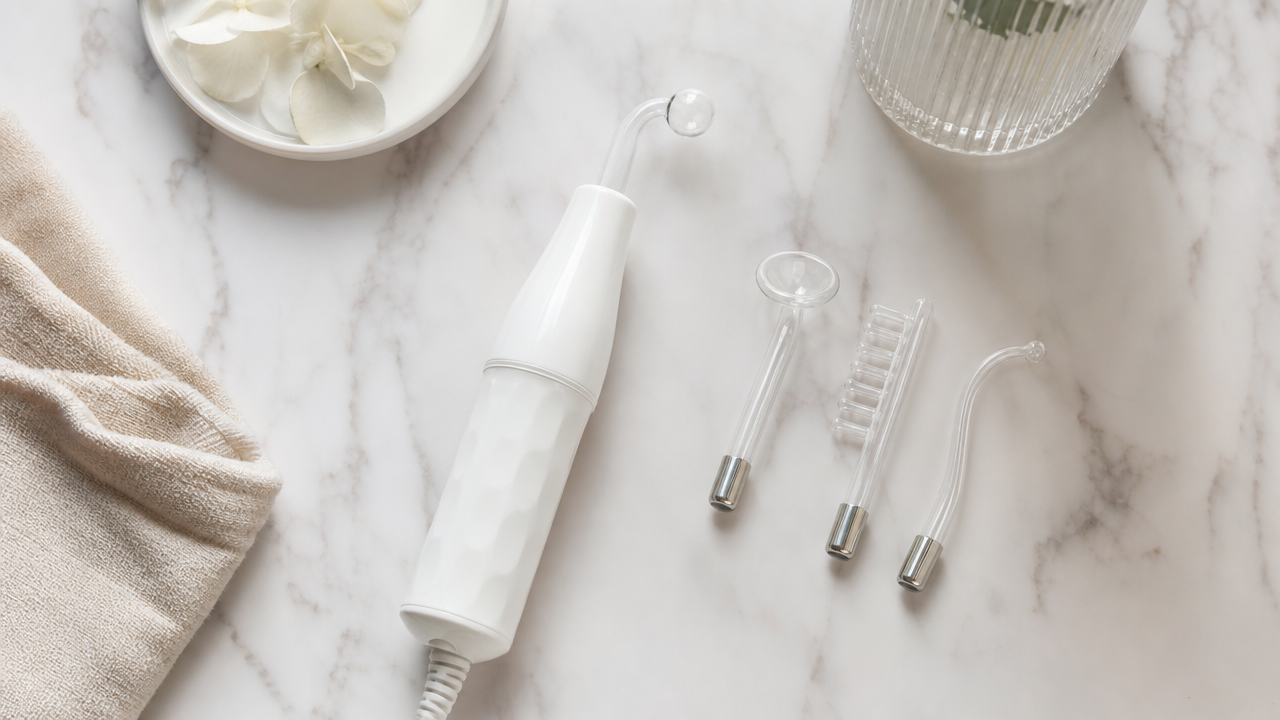
The device works through glass electrode tubes filled with either neon gas (producing an orange-red glow) or argon gas (producing a violet-purple glow). When the current passes through the gas-filled tube and contacts the skin, you see that characteristic glow and hear a gentle buzzing sound. If you've studied in an esthetics school, this is one of the first things you learn to recognize.
How Does a High Frequency Machine Work on Skin?
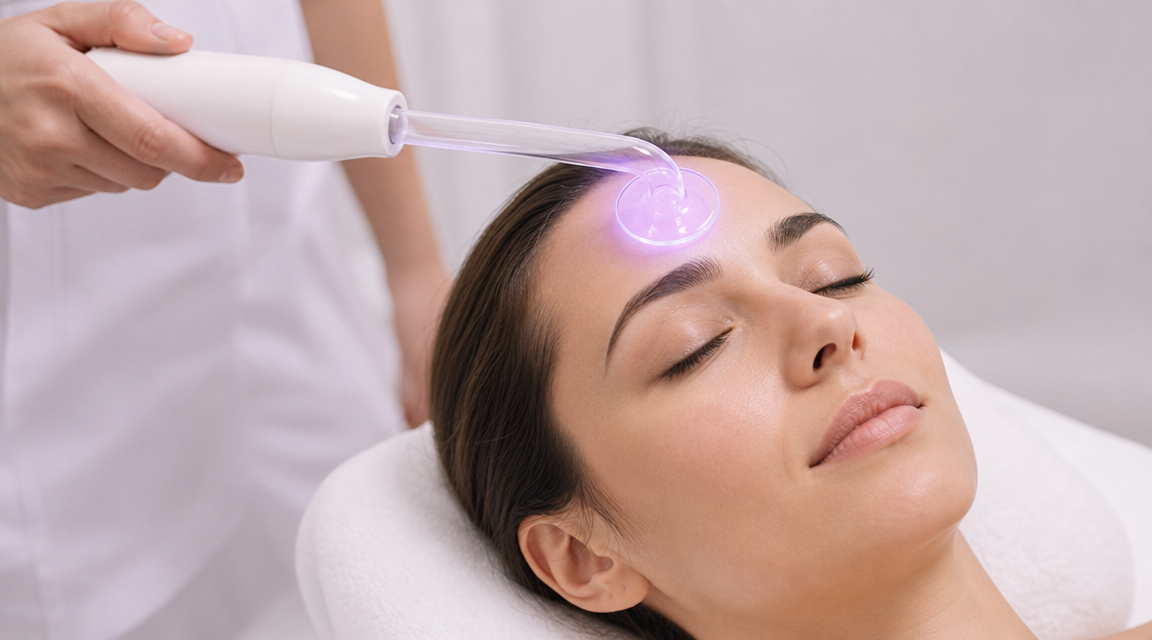
The mechanism is surprisingly straightforward. When the oscillating current passes through the glass electrode, it creates a small electrical charge on the skin's surface. This charge produces two primary effects:
1. A gentle thermal (warming) effect. The current increases local circulation, which brings more blood to the surface. Estheticians are trained to watch for erythema — a light, temporary skin flush — as a sign that circulation has been stimulated.
2. A germicidal ozone effect. As the electrical current moves through the air gap between the electrode and the skin, it produces trace amounts of ozone. Ozone has a well-documented surface-sanitizing action, which is why high frequency has long been associated with acne-focused facial treatments.
This technology is grounded in the work of 19th-century physicist Nikola Tesla and the broader history of high-frequency current application — specifically the D'Arsonval current, which forms the historical foundation of all modern HF esthetic machines. The principle has been refined over more than a hundred years of professional use.
The Main Skin Benefits Estheticians Are Taught (and What Science Says)
Here's what the Milady curriculum highlights — and what evidence-informed practice supports:
- Acne and breakouts: The germicidal ozone produced during treatment helps reduce surface bacteria. In a professional facial, HF is frequently applied as a spot treatment directly over active breakouts.
- Circulation and glow: Increased local blood flow may temporarily brighten the complexion and give skin a "lit from within" appearance after treatment.
- Product absorption support: Some practitioners use the indirect HF method after applying a serum, as the warmth generated may support better absorption into the skin.
- Scalp treatments: High frequency is also covered in cosmetology curricula for scalp stimulation, supporting follicle health and circulation in the scalp — a separate and equally valuable application.
Peer-reviewed research on high-frequency skin treatments does suggest that electrical stimulation can influence sebaceous gland activity and surface microbial load, though large-scale clinical trials on consumer-grade devices remain limited. The consensus in the esthetics world is that HF is a complementary tool — excellent as part of a broader routine, not a standalone solution.
Quick tip : For best results, use your high frequency wand after cleansing and before applying your serum. The mild warmth from the session creates an ideal window for serums to absorb deeply into freshly stimulated skin.
Direct vs. Indirect Method — What Milady Teaches
This is one of the most frequently tested concepts in cosmetology licensing exams, so let's be precise.
| Method | How It Works | Best For | Effect |
|---|---|---|---|
| Direct method | Electrode placed directly on client's skin | Oily, acne-prone, congested skin | Germicidal ozone, targeted spot treatment |
| Indirect method (Viennese massage) | Client holds the electrode; esthetician massages the face | Dry, mature, dull complexions | Warmth, circulation boost, relaxation |
The direct method is what most people imagine when they think of a high frequency facial — the glowing glass tube gliding over the skin. It's ideal for oily zones and breakout areas.
The indirect method, sometimes called "general electrification" or the Viennese massage in Milady editions, has the client hold a saturator electrode while the esthetician uses their fingertips to massage the face. The current flows through the esthetician's hands, creating a pleasant warming sensation — a beautiful treatment for drier or more mature skin types.
Standard contraindications listed in all Milady editions include:
- Epilepsy or seizure disorders
- Pacemakers or other electronic implants
- Pregnancy
- Metal implants in the treatment area
- Highly sensitive or inflamed skin
- Open wounds or severe cystic acne
Students should always cross-reference their specific Milady edition, as contraindication lists are updated with each new release. When in doubt, skip the treatment and consult a licensed professional.
From Esthetics School to Your Bathroom — At-Home High Frequency Wands
Professional HF machines used in esthetics schools and salons are large, expensive pieces of equipment — not something you can realistically keep on your bathroom shelf. But the good news is that at-home high frequency devices have evolved significantly, bringing the same core technology into a compact, safe, and affordable format.
The key differences between professional and at-home devices:
- Power output: At-home wands operate at lower intensity levels, designed for safe self-application without professional supervision.
- Electrode size: Smaller electrodes suited for individual home use rather than a full clinical setup.
- Session length: Shorter recommended sessions (5–10 minutes per zone vs. 10–20 minutes in a professional setting).
The HighWand™ is built with exactly this in mind — interchangeable glass electrodes that mirror the professional workflow estheticians are trained on, in a device sized for everyday home use. Each product is matched to a specific concern:
- Acne and breakouts: The high frequency wand for acne-prone skin uses the germicidal argon electrode to target active breakouts.
- Scalp and hair health: The high frequency wand for scalp and hair health applies HF principles to stimulate scalp circulation.
- Anti-aging and glow: The anti-aging wand supports circulation and a brighter complexion over time.
Start with the mushroom-shaped electrode for general facial work — the same electrode shape recommended in esthetics textbooks for full-face treatments.
How to Use a High Frequency Wand at Home — Step-by-Step (Milady-Aligned)
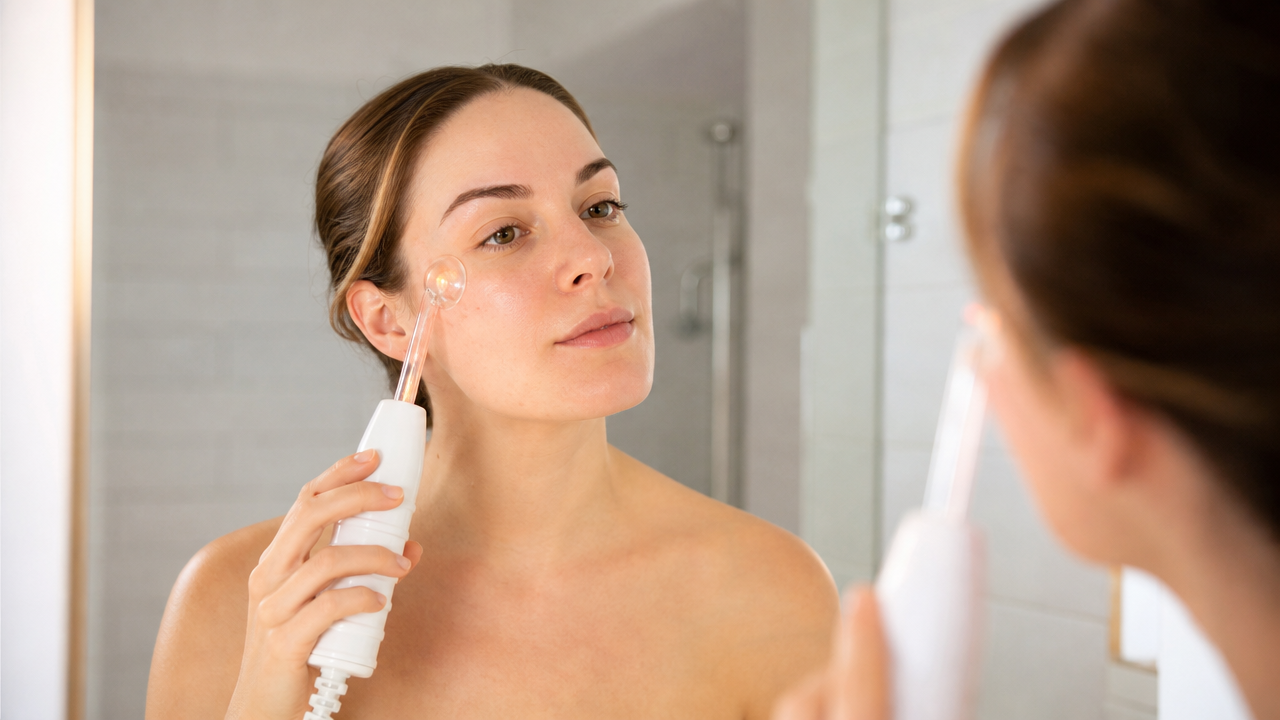
This protocol mirrors the professional approach taught in cosmetology school — just scaled for home use:
Step 1 — Cleanse thoroughly. Start with a completely clean, dry face. Any residue from makeup or excess skincare products can interfere with the electrode's contact and effect.
Step 2 — Choose your method. For acne-prone or oily skin, use the direct method: electrode directly on skin. For a circulation boost or a more relaxing treatment, explore the indirect approach.
Step 3 — Set to low intensity and begin gliding. Move the electrode in slow, circular or upward strokes. Spend approximately 30–60 seconds per zone (forehead, cheeks, chin, nose). Never hold the electrode stationary in one spot.
Step 4 — Follow with serum or moisturizer. Apply your chosen serum immediately after. The mild warmth from the session may support absorption.
Step 5 — Repeat 3–5 times per week for consistent results. Always patch-test on your inner wrist before your first full-face session.
What NOT to do:
- Never use on wet skin
- Avoid broken skin, open wounds, or active cysts
- Keep away from the eye area
- Do not use over metal implants or piercings in the treatment zone
- Never turn the intensity up quickly — always start low
Always read the product manual before first use. Milady teaches students to read all device instructions before operating any piece of esthetics equipment — the same logic applies at home.
Who Should (and Shouldn't) Use a High Frequency Machine?
Great candidates for HF skin treatments:
- Oily or acne-prone skin types looking for a complementary tool
- Anyone wanting a professional-feel facial experience at home
- Those with dull complexions seeking a temporary circulation boost
- Esthetics students who want to practice the technique they're learning in school
Use with caution or avoid entirely:
- Pregnancy (standard contraindication across all esthetics curricula)
- Pacemakers or any electronic medical implant
- History of epilepsy or seizure disorders
- Active rosacea flare-ups or highly reactive skin
- Open wounds, cold sores, or severe cystic acne
If you have a diagnosed skin condition or any of the above health factors, consult your dermatologist or healthcare provider before introducing any new electrical skincare device. Milady-trained estheticians conduct a full client consultation before every HF treatment — apply the same logic to your at-home routine.
For more guidance on finding the right tool for your specific skin type, the guide on choosing the right skincare tool for your skin type is a great starting point. And if you want to go deeper into the science, explore the full breakdown of high-frequency skincare benefits and how it works on the HighWand™ blog.
Customer story : Many users in this situation report starting with just two sessions per week, then building up gradually as their skin adjusts — finding that the learning curve is much shorter than expected, especially if they've already studied the concept in class.
Ready to bring professional esthetic technology into your daily routine? The high frequency wand for acne-prone skin is designed to deliver the germicidal, circulation-boosting benefits you've been reading about — in the palm of your hand.
Frequently Asked Questions
1. What does "high frequency machine Milady" mean?
"Milady" refers to Milady Publishing, the company behind the Milady Standard Esthetics and Milady Standard Cosmetology textbooks — the most widely used curricula in North American beauty schools. When students search "high frequency machine Milady," they're typically looking for the textbook def

About the Author: Calla Winslow
Calla Winslow is a passionate skincare enthusiast and beauty writer based in Los Angeles. With a love for science-backed routines and a deep understanding of sensitive skin, Calla shares expert tips, honest reviews, and practical wellness advice to help readers achieve their healthiest glow.
More skincare tips
View all-

Argon vs Neon High Frequency Wands: Which Is Ri...
Argon vs neon high frequency wands — discover how each gas works, which skin concerns they target best, and how to choose. Read the full comparison guide.
Argon vs Neon High Frequency Wands: Which Is Ri...
Argon vs neon high frequency wands — discover how each gas works, which skin concerns they target best, and how to choose. Read the full comparison guide.
-

Tube Facial: What It Is, How It Works & Real Be...
Discover what a tube facial really does for your skin, how to do it at home, and which tools actually work. Try it yourself today!
Tube Facial: What It Is, How It Works & Real Be...
Discover what a tube facial really does for your skin, how to do it at home, and which tools actually work. Try it yourself today!
-

H Rosacea Formula: What It Is & How to Manage F...
Discover what the H rosacea formula means, which ingredients calm redness, and how to build a gentle routine that soothes sensitive skin. Read now →
H Rosacea Formula: What It Is & How to Manage F...
Discover what the H rosacea formula means, which ingredients calm redness, and how to build a gentle routine that soothes sensitive skin. Read now →
- Choosing a selection results in a full page refresh.
- Opens in a new window.